A Reunion in the Tetons - Field Notes
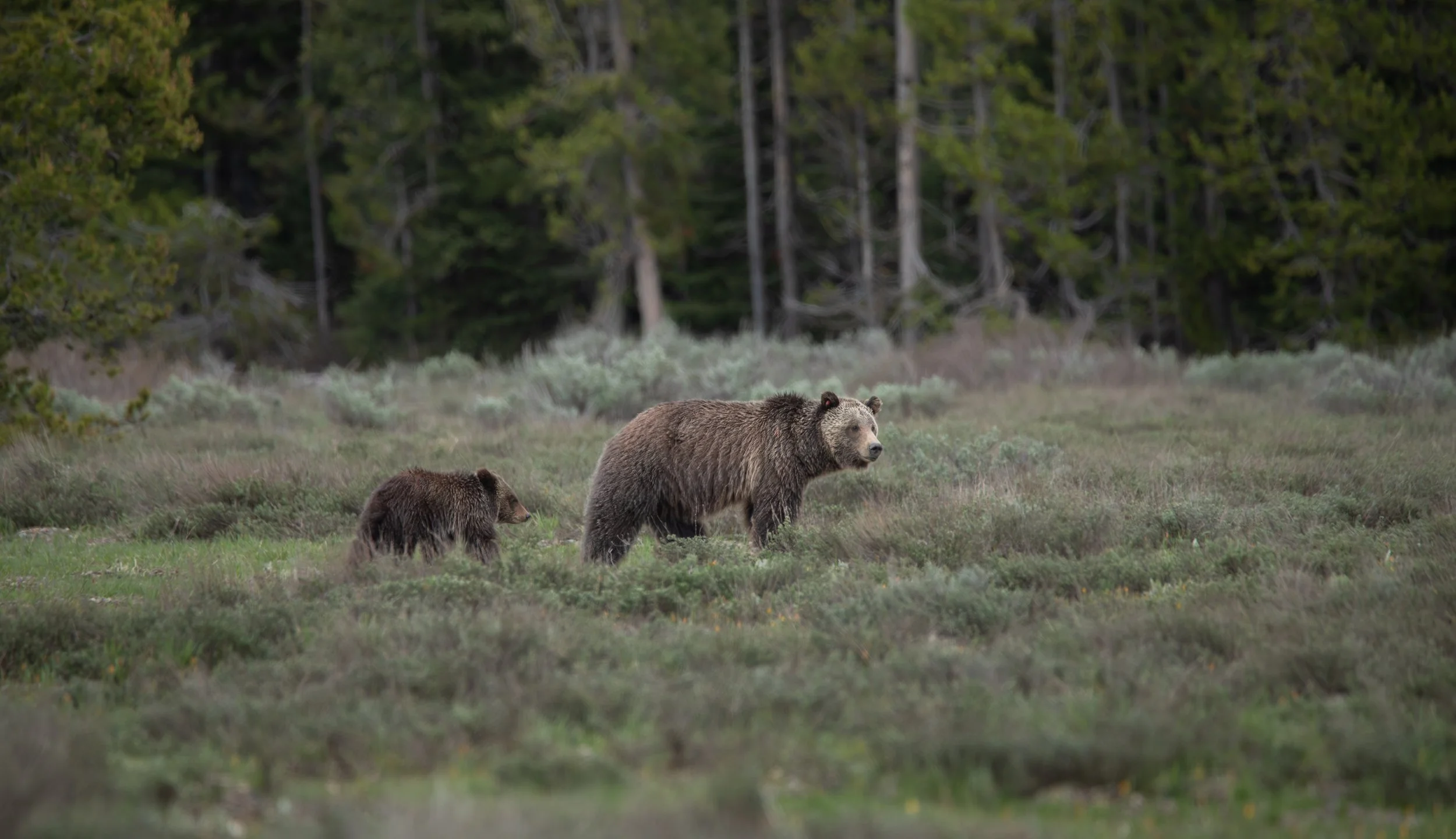
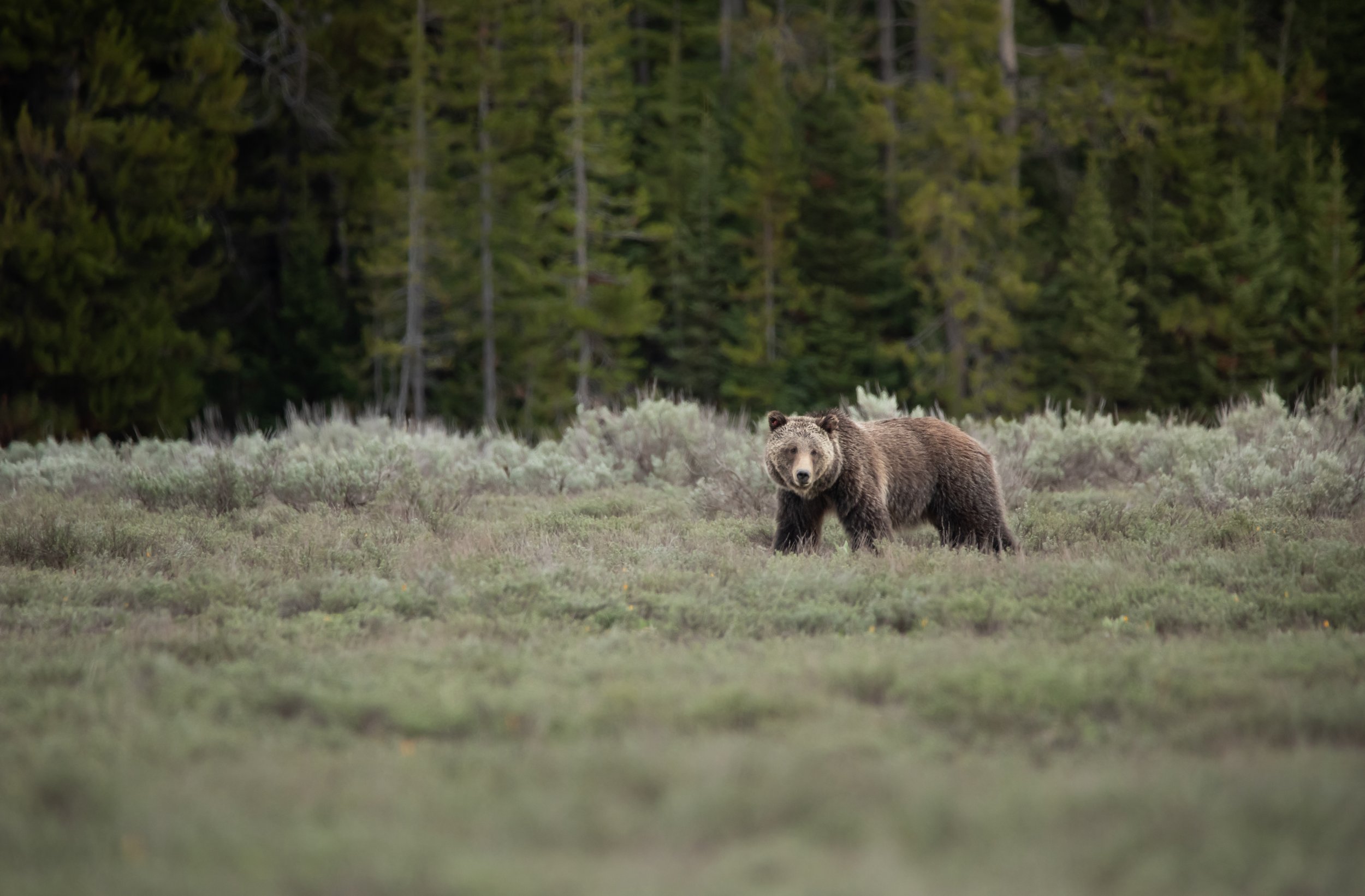
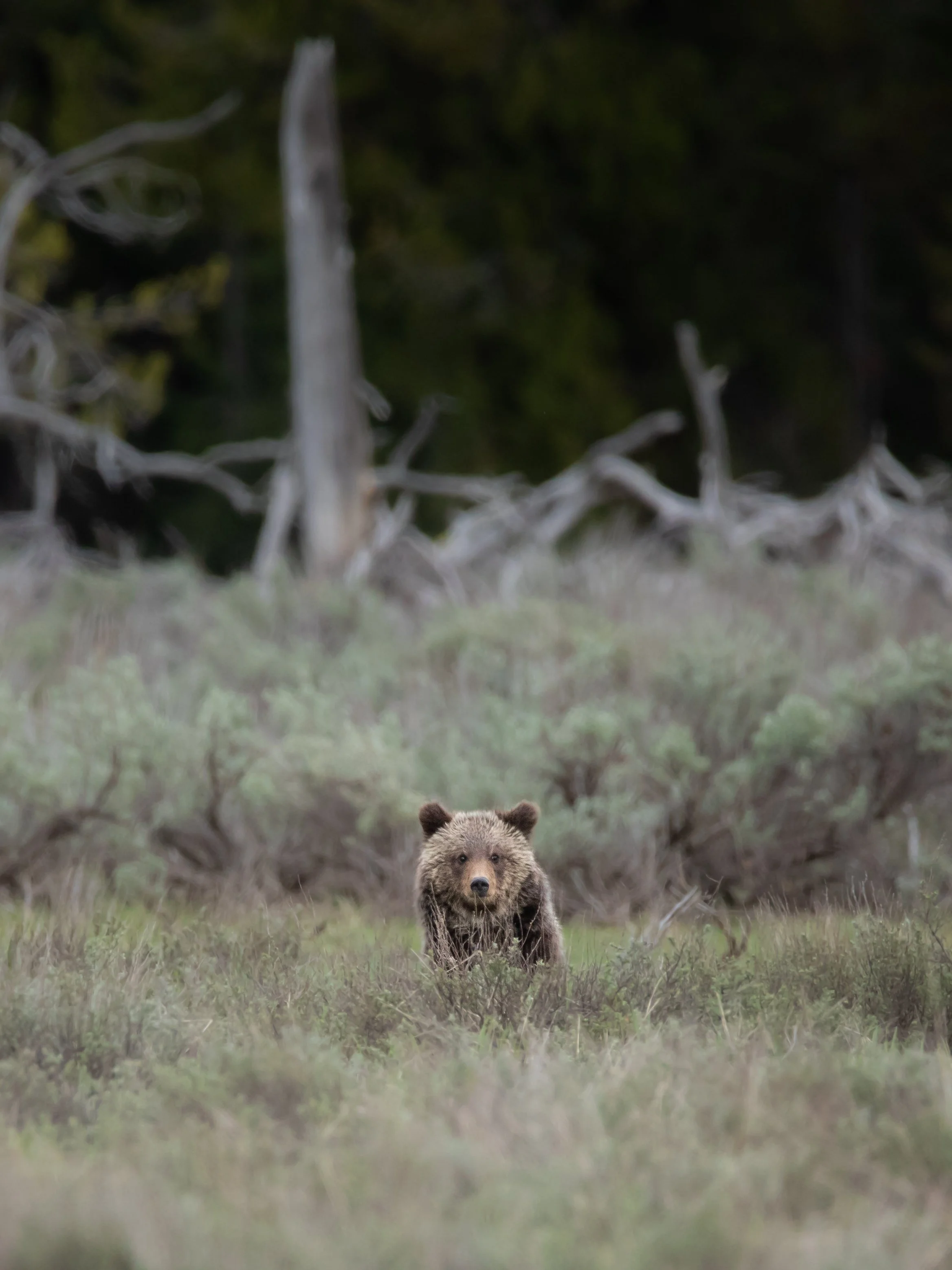
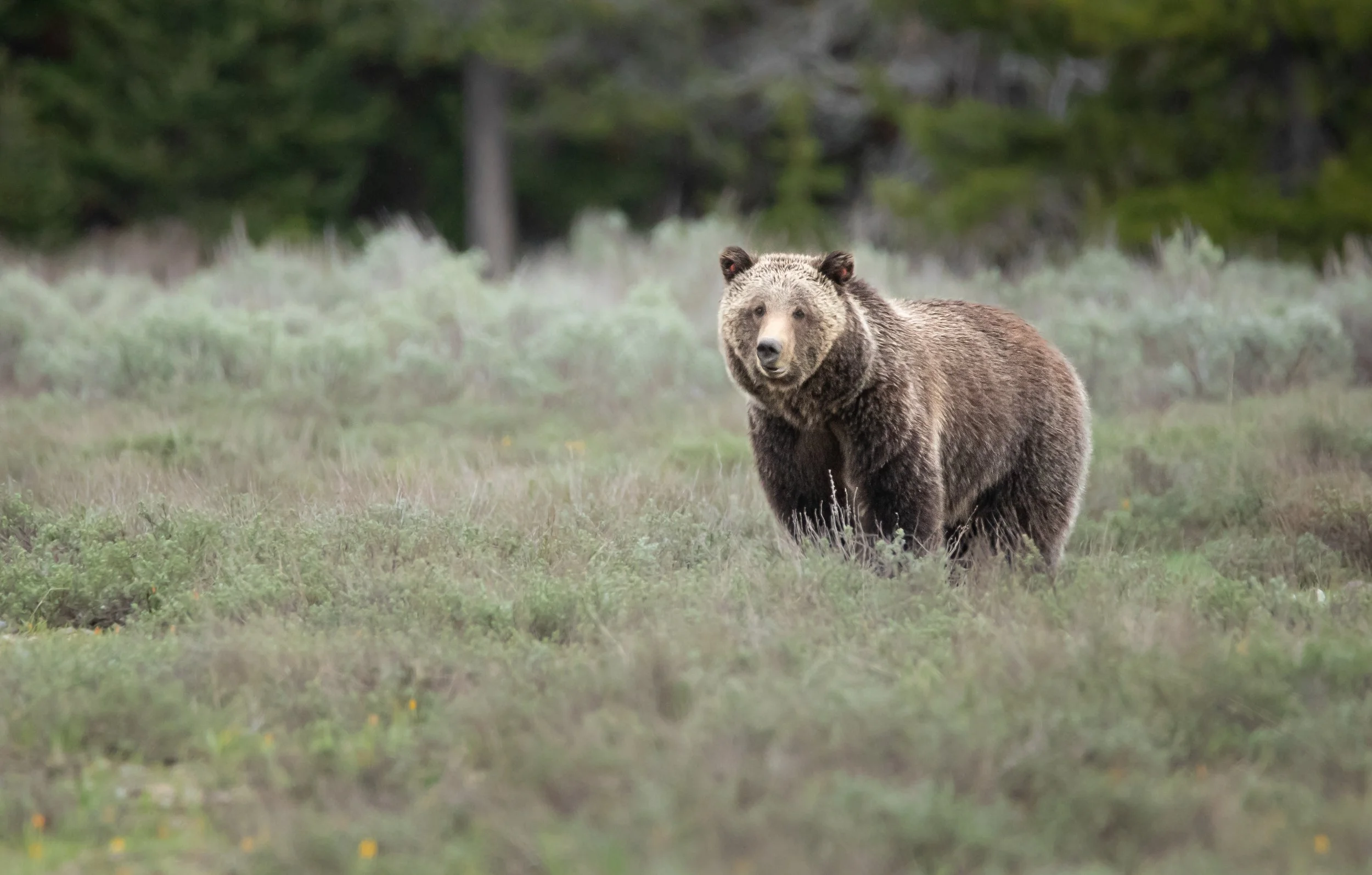
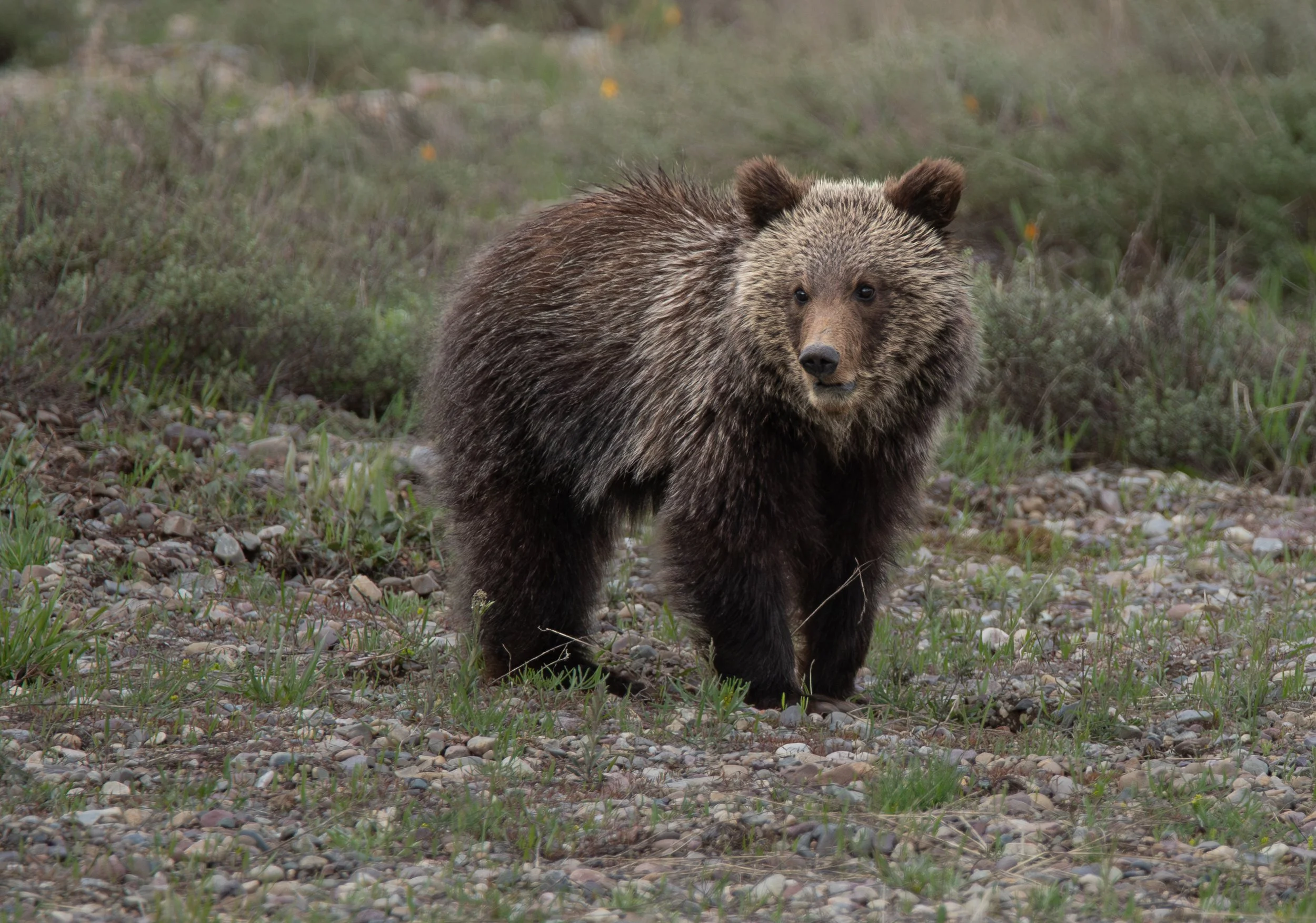
Image: Grizzly 1063 and her little cub, Miracle, only days after their extraordinary reunion.
In every wildlife photographer’s career, there is a moment where days of missed opportunities, hard work, and sheer determination come to fruition.
That morning in Grand Teton National Park started with a dusting of snow. In the Greater Yellowstone Ecosystem, winter weather can occur year-round, even in the middle of May. Herds of elk (Cervus canadensis nelsoni), having recently migrated back to the valley for the summer, trotted across sagebrush flats. American bison (Bison bison), somewhat uncommon in the Tetons, used the parkway as a walking path. As amazing as it was to see some of my favorite large ungulates, I was focused on finding two individual animals in the 310,000 acre national park - grizzly bear (Ursus arctos) 1063 and her cub.
A few days before our arrival, 1063 (tagged by NPS biologists) had emerged for spring with three yearling cubs. The life of a grizzly bear in the Greater Yellowstone Ecosystem is demanding and dangerous, especially for inexperienced youngsters. Soon after their reemergence, park rangers stumbled on two of the cubs, deceased. The third was missing, but presumed to have met the same fate. Male bears will kill any cub that is not their own, an unfortunate but brute fact of grizzly bear biology. We had spotted 1063 on our first day in Grand Teton, in her home territory of Colter Bay. She moved through the forest at a clip, running across the road with her head on a swivel. There is often a fine line in biology that we dare not cross as to not anthropomorphize non-human animals, but there was no doubt that this was a mother in distress.
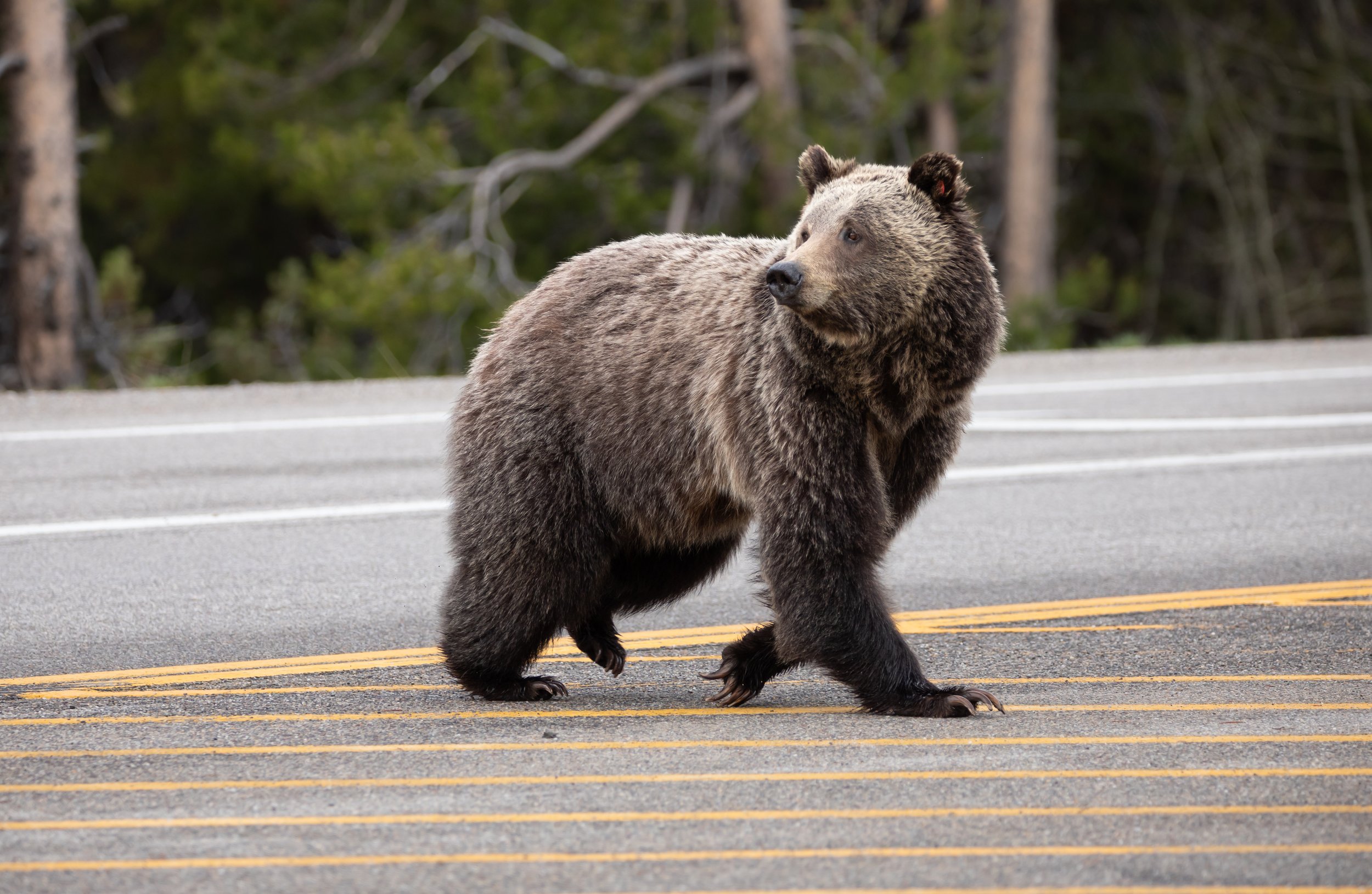
Image: Grizzly 1063 dashes across the road, only a few days after losing her cubs.
It was a sad scene, one that hung heavy over the park. Visitors and locals alike know these bears by name, and heartbreaking moments like this are hard to witness. But as harsh as the natural world can be, it is capable of unbelievable miracles.
That third cub not only managed to survive on her own for days, but she beat the odds and found her way back to 1063. Stories like this are unheard of, and the news spread to every photographer and casual bear watcher in the area. For me, this was a story I had to tell.
So that’s how I found myself driving in circles around the park for two days straight, but my time in the Tetons was running short. And as the hours passed and an evening thunderstorm moved in, my chances of seeing 1063 and her cub were slim. Daylight was fading, and I made the choice to head back to our motel in Jackson Hole.
Just as I rounded the corner, a few miles up the road from Jackson Lake, I saw it - a row of a dozen red tail lights signifying the beginnings of a bear jam, right in the middle of 1063’s stomping ground. I knew that this was my opportunity to not only see this small grizzly bear family, but my best chance of capturing images that can tell their story. I pulled off on the side of the road, one of probably fifty other cars, and waited.
For a while, we couldn’t see anything through the rain and growing crowd. Wildlife managers came by our vehicle, telling us to stay inside. The bears were close, and it was only a matter of time until they showed themselves. We soon caught glimpses of silver-tipped fur between bumpers - 1063, moving just along the other side of the road with purpose. There was a moment when I worried that would be all we’d see of her before she took her little one into the forest to den for the night.
But the wild rewards those who wait. 1063 peeked around the hood of a truck across from us, her broad head swinging from side to side as if she was looking both ways. Then she took a step forward, massive claws clacking against the pavement. Behind her, close enough to almost trip over her paws, was the tiny cub. She stood about half as tall as the Ford’s wheels, though you could hardly distinguish her from her mother with how close she was stuck to her side.
1063 deemed the scene as safe, and she led the cub across the road, right in front of our car.
Note: Thank you to Jacob Dunford, who was my passenger, for being calm and collected enough to capture this video whilst I was too excited to even think straight!
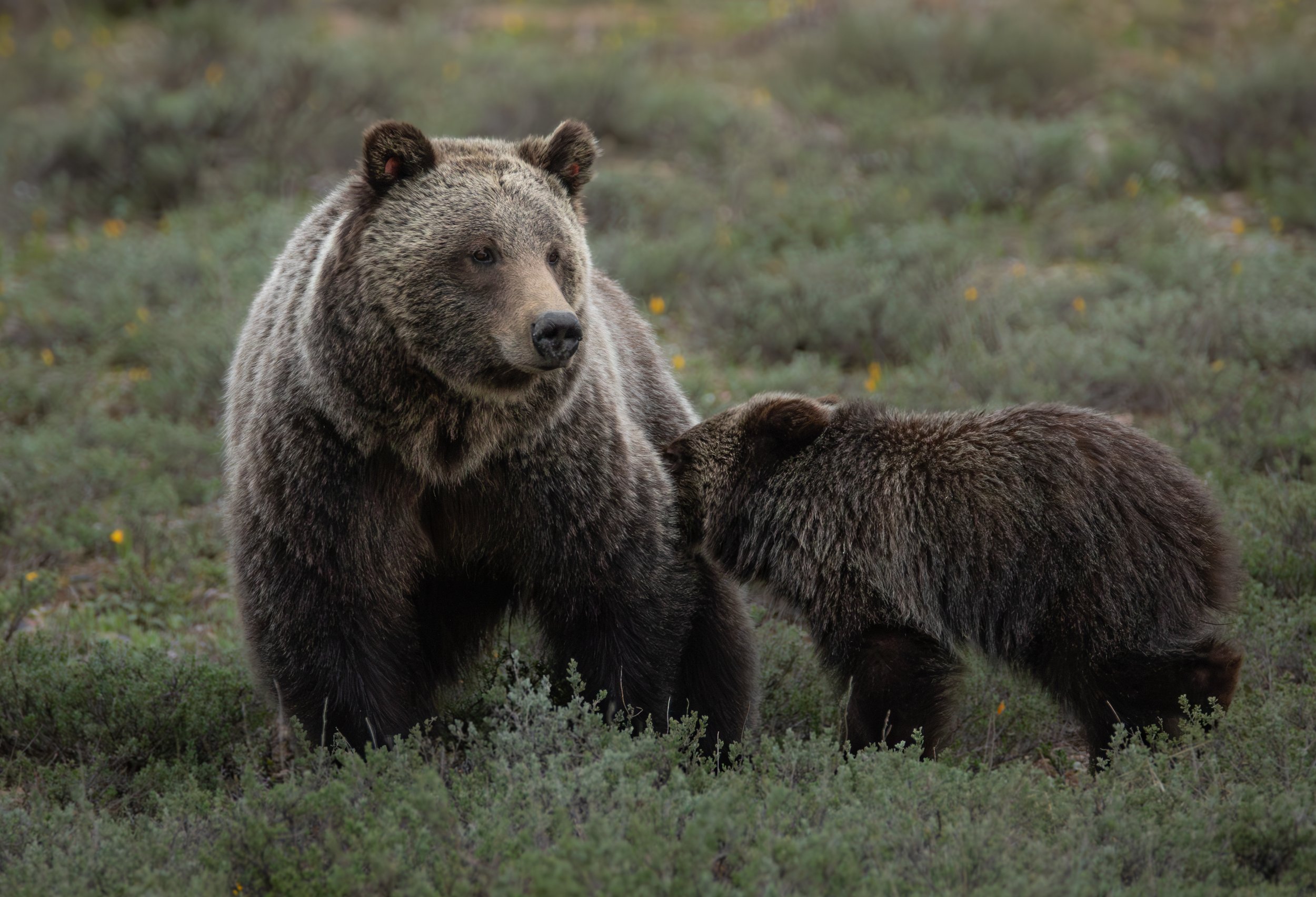
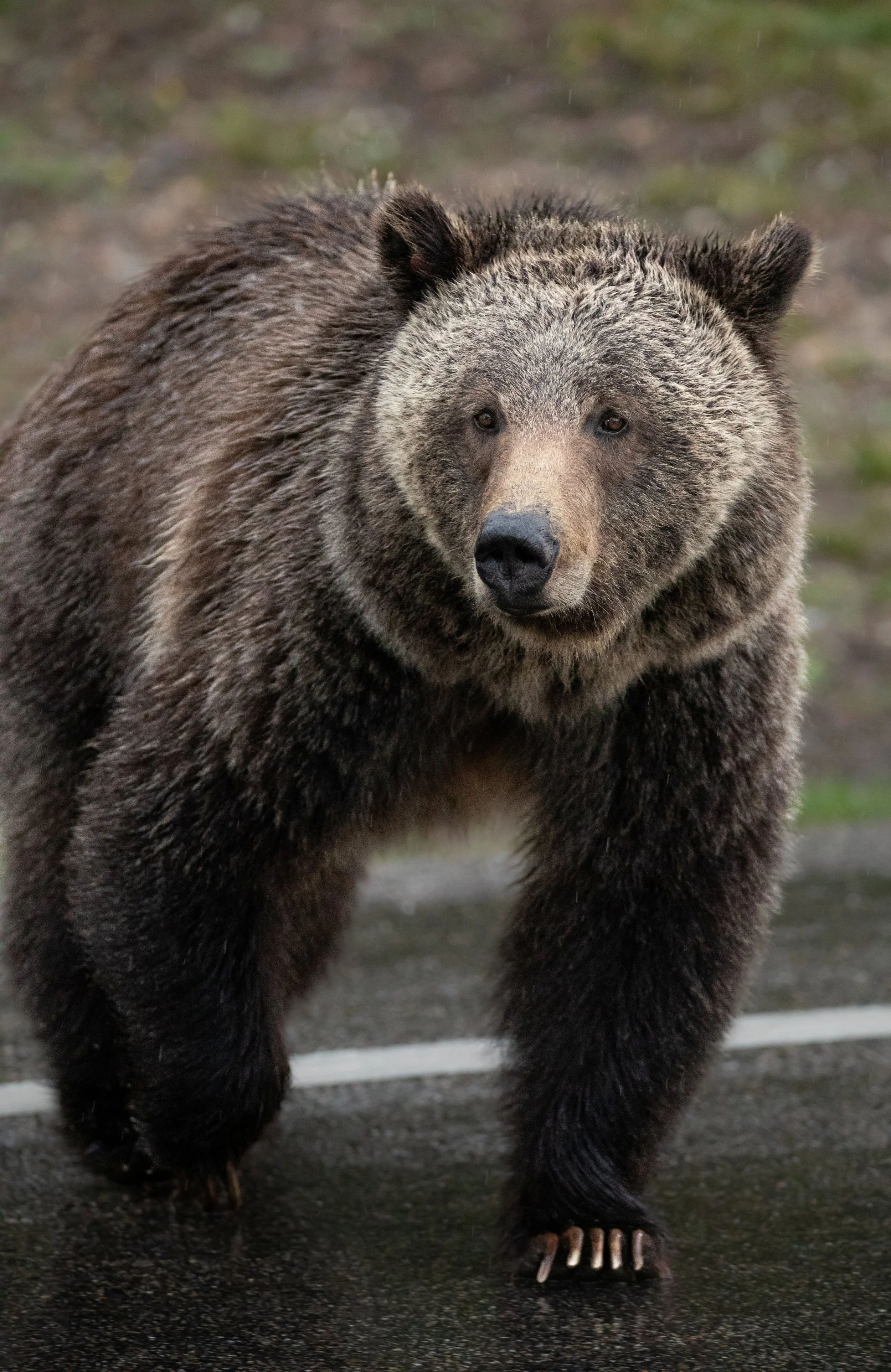
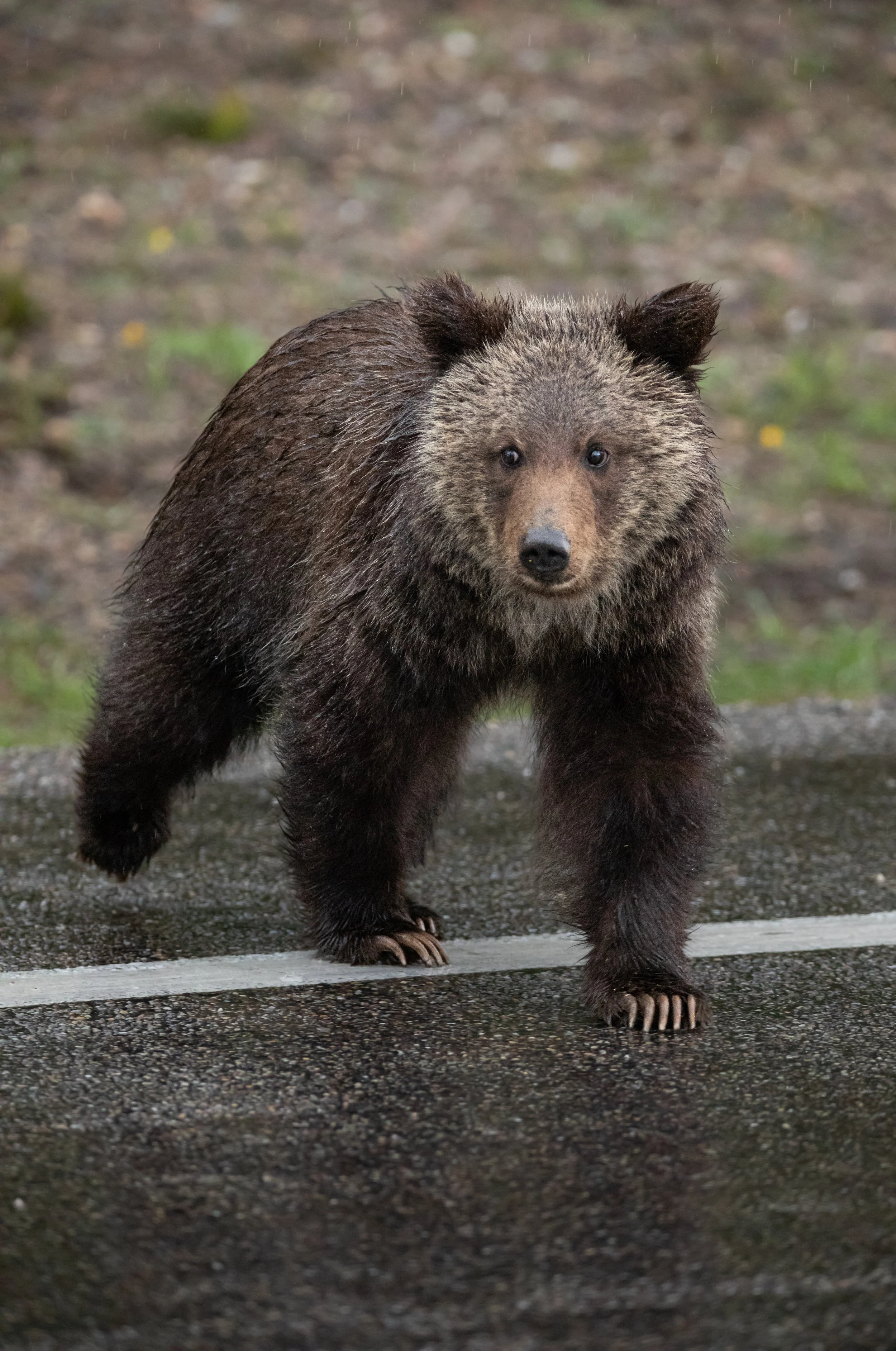
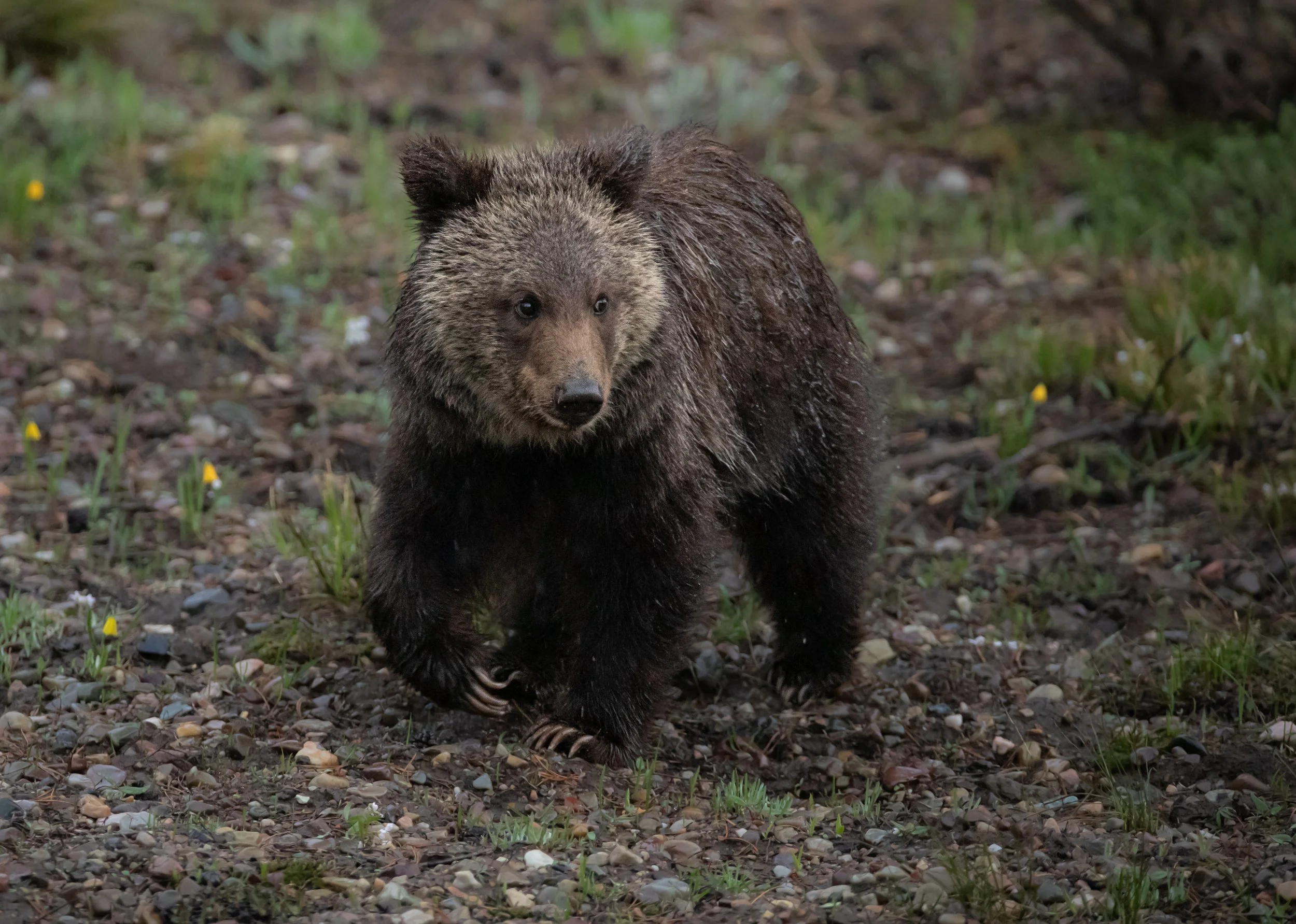
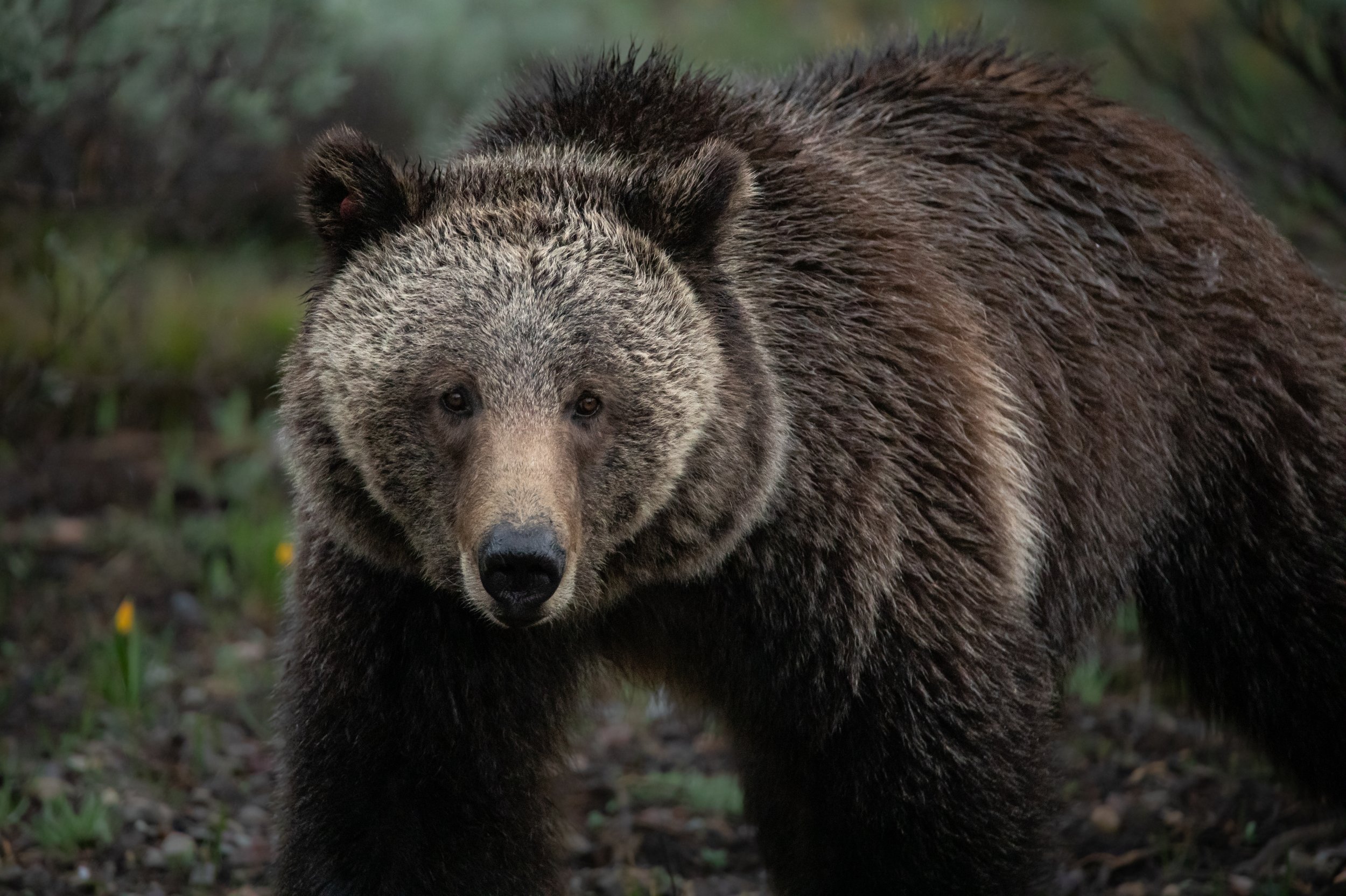
I couldn’t believe it. I would have never imagined we’d share such an intimate and profound moment with this strong mama bear and her brave cub. 1063 stopped on the other side, standing in a small sagebrush meadow. She glanced over her shoulder at me, hazel eyes moving to survey the gathering horde of fans. Then she sat under the shelter of a lodgepole pine (Pinus contorta), her little cub sticking close to her side, calm but alert.
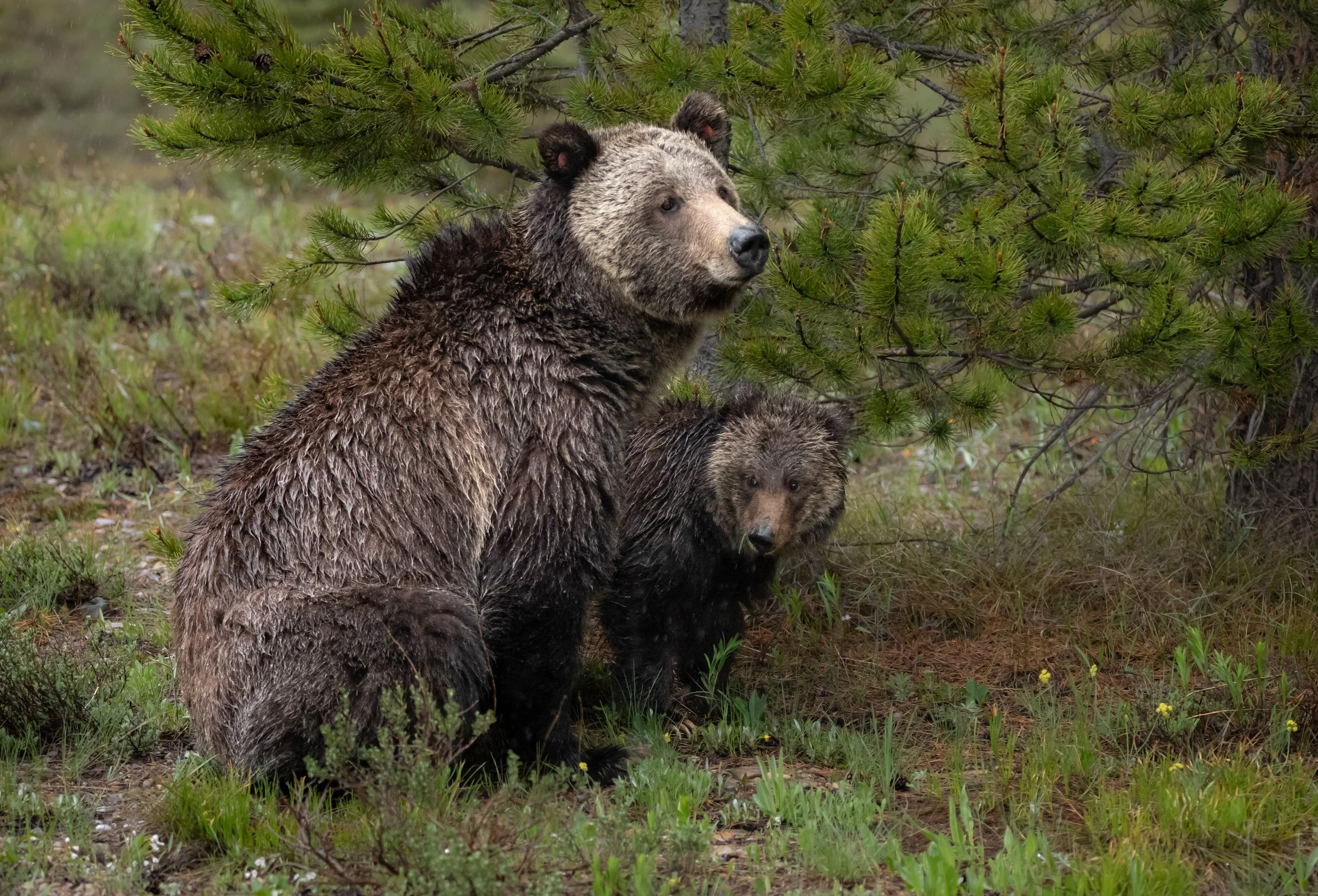
Image: Grizzly 1063 and her little Miracle cub, reunited once again.
Click. That was the shot I was looking for. It was a culmination not only of multiple days of searching, but years of careful management and care of wild grizzly bears by the national park service. Reunions like this don’t happen anywhere other than protected natural spaces, like national parks, where wild animals are able roam and coexist with us.
This story also serves as an important reminder - when we visit wild places, we are guests. It is up to us to act responsibly around our wild neighbors, especially apex predators like grizzly bears. 1063’s story brought in crowds of people, all of whom were itching to spot the bear for themselves. Even though 1063 was raised around tourists and can navigate busy roads lined with hundreds of people, these situations can be dangerous for her, her cub, and people. High stress situations, like the one I was able to capture below, are managed by dedicated “bear jam” volunteers and wildlife rangers. It’s imperative to listen to those who know these animals best, and to always use your best judgement to keep yourself and these incredible critters safe!
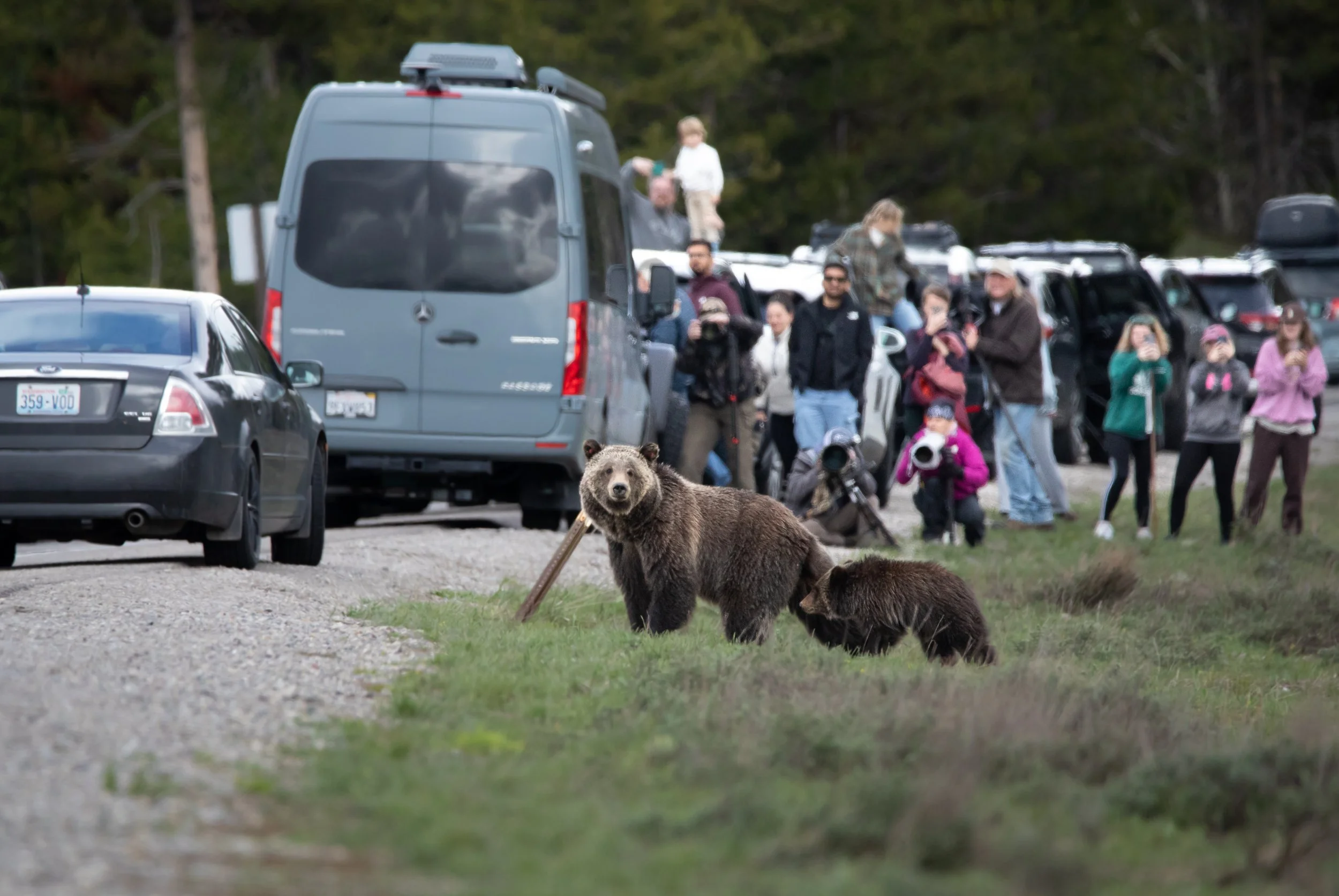
Image: Grizzly 1063 and her cub attempting to cross the road, braving a crowd of dozens of excited visitors.
Little Miracle has gone off on her own now, and no doubt carries the many lessons her mother taught her. One day, when she has cubs of her own, she’ll pass on that knowledge to them, ensuring that grizzly bears continue to thrive in the Greater Yellowstone Ecosystem for generations to come.