Dance of the Egret - Field Notes
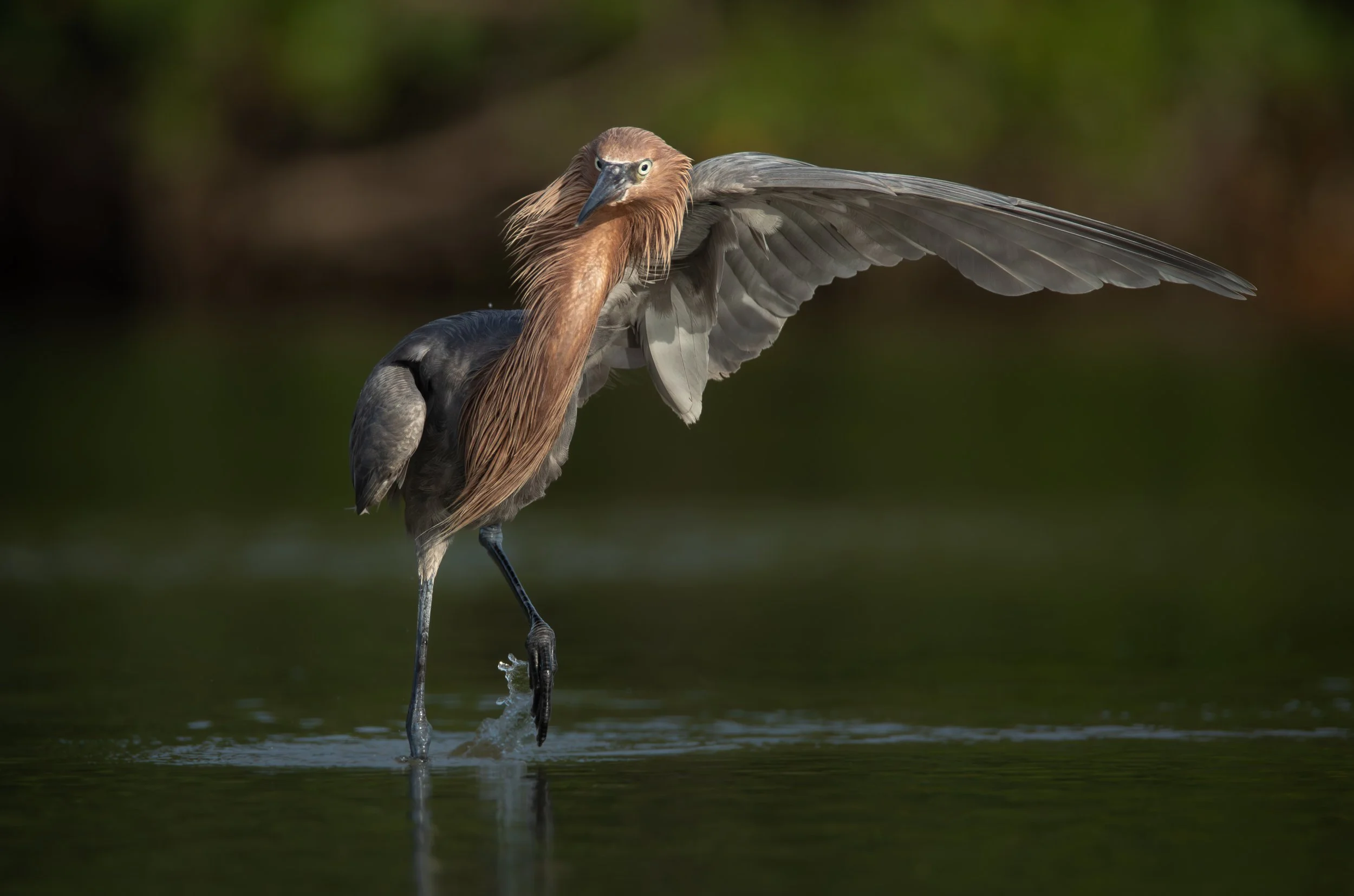
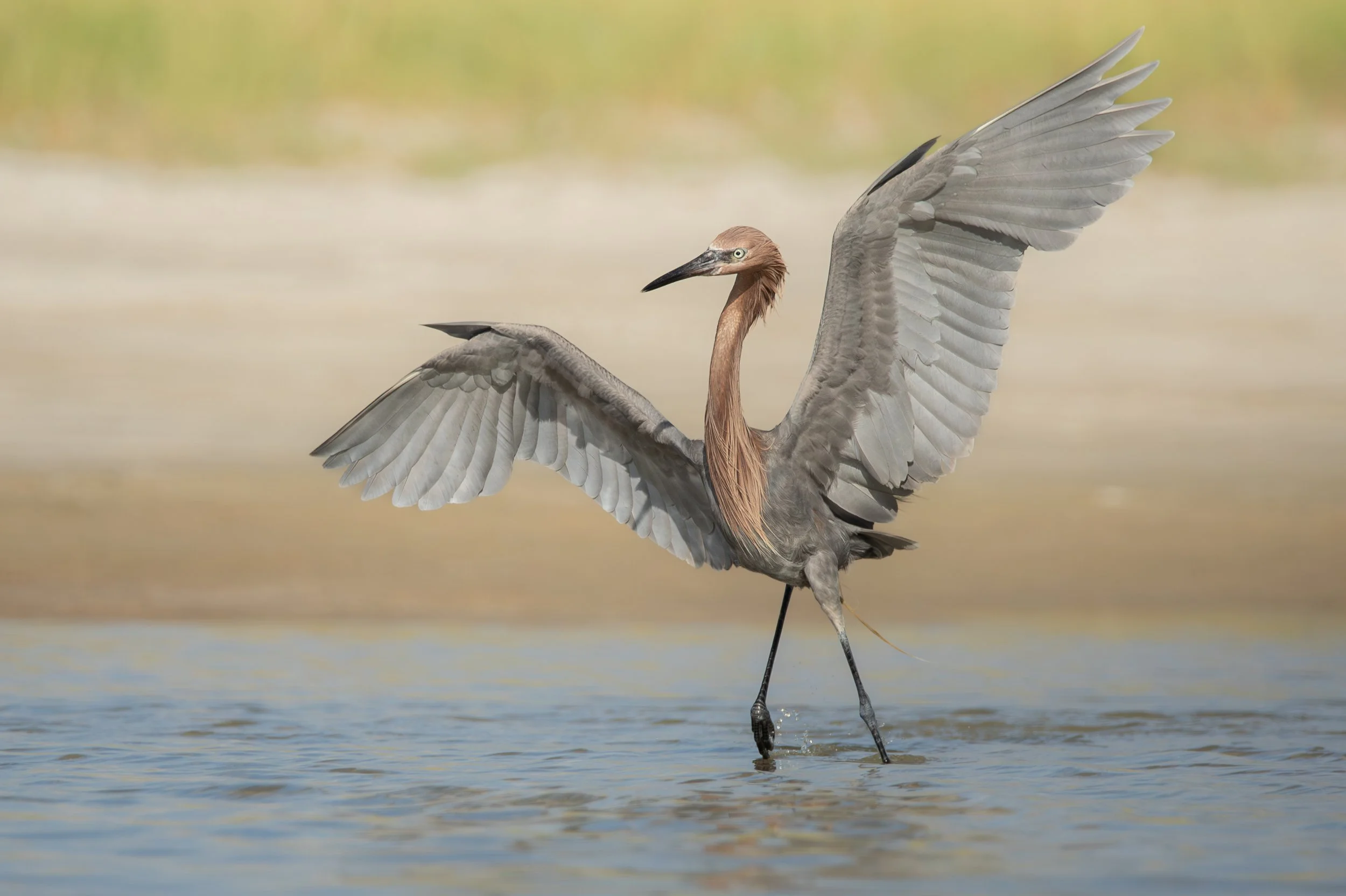
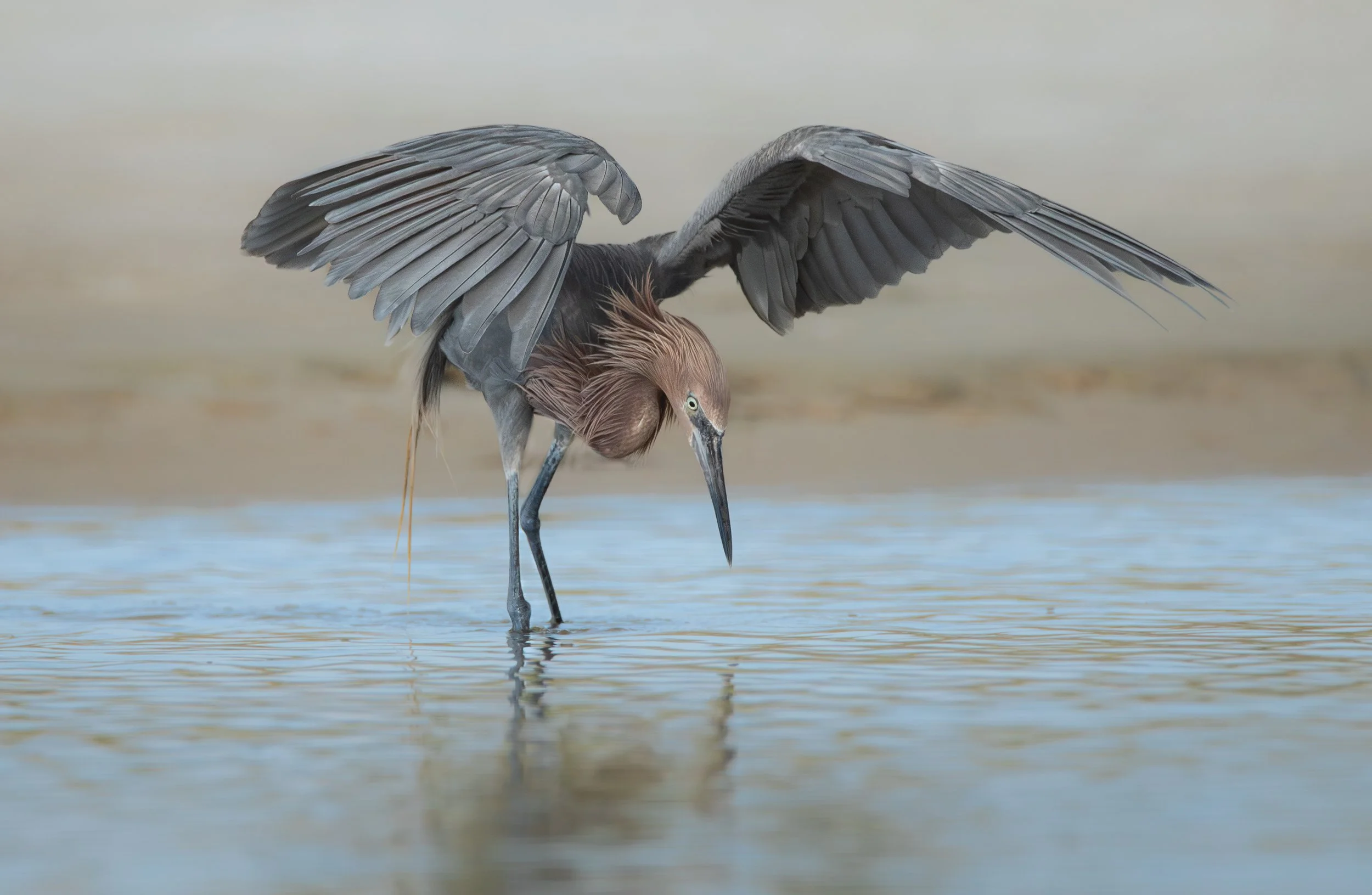
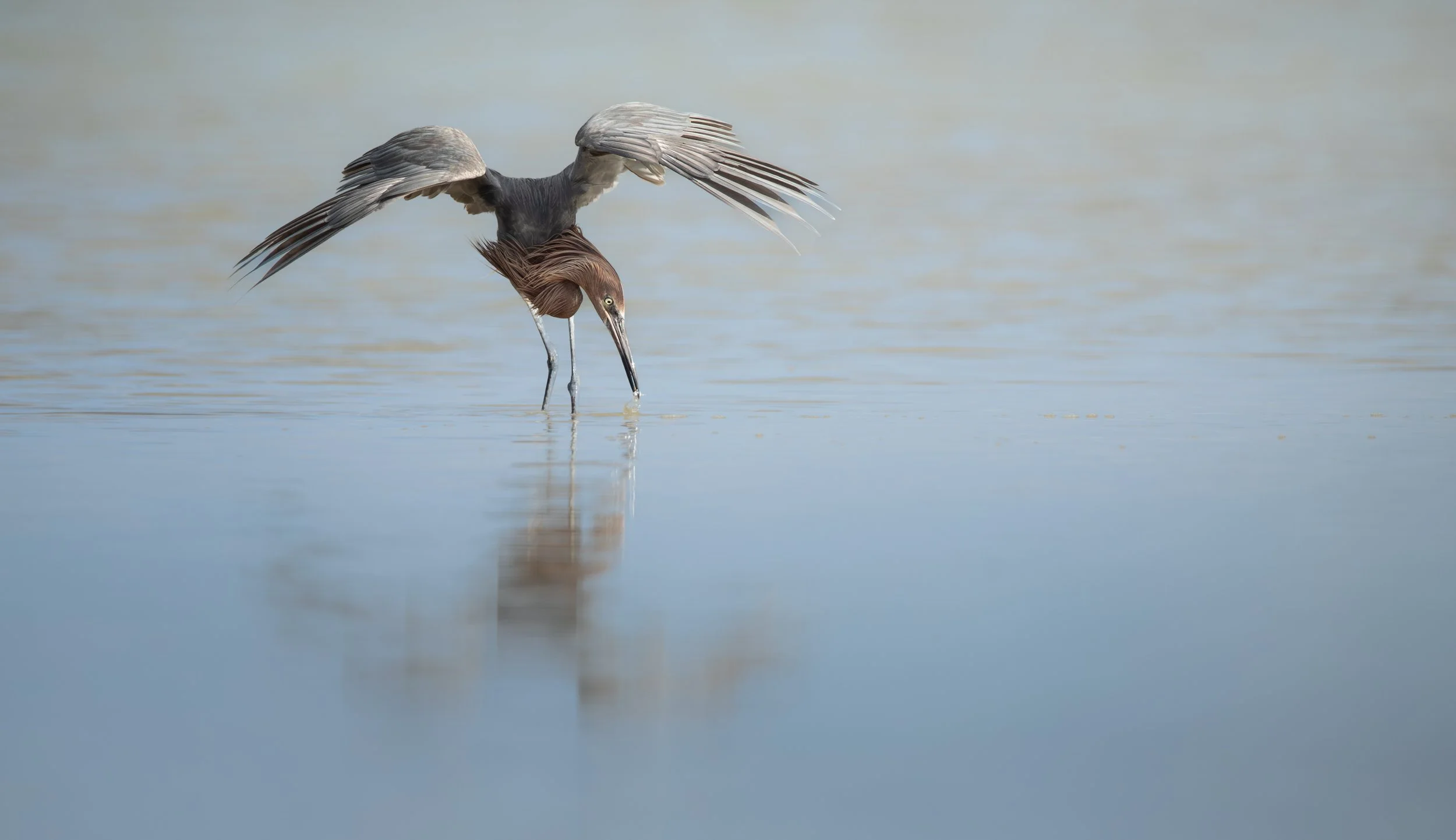
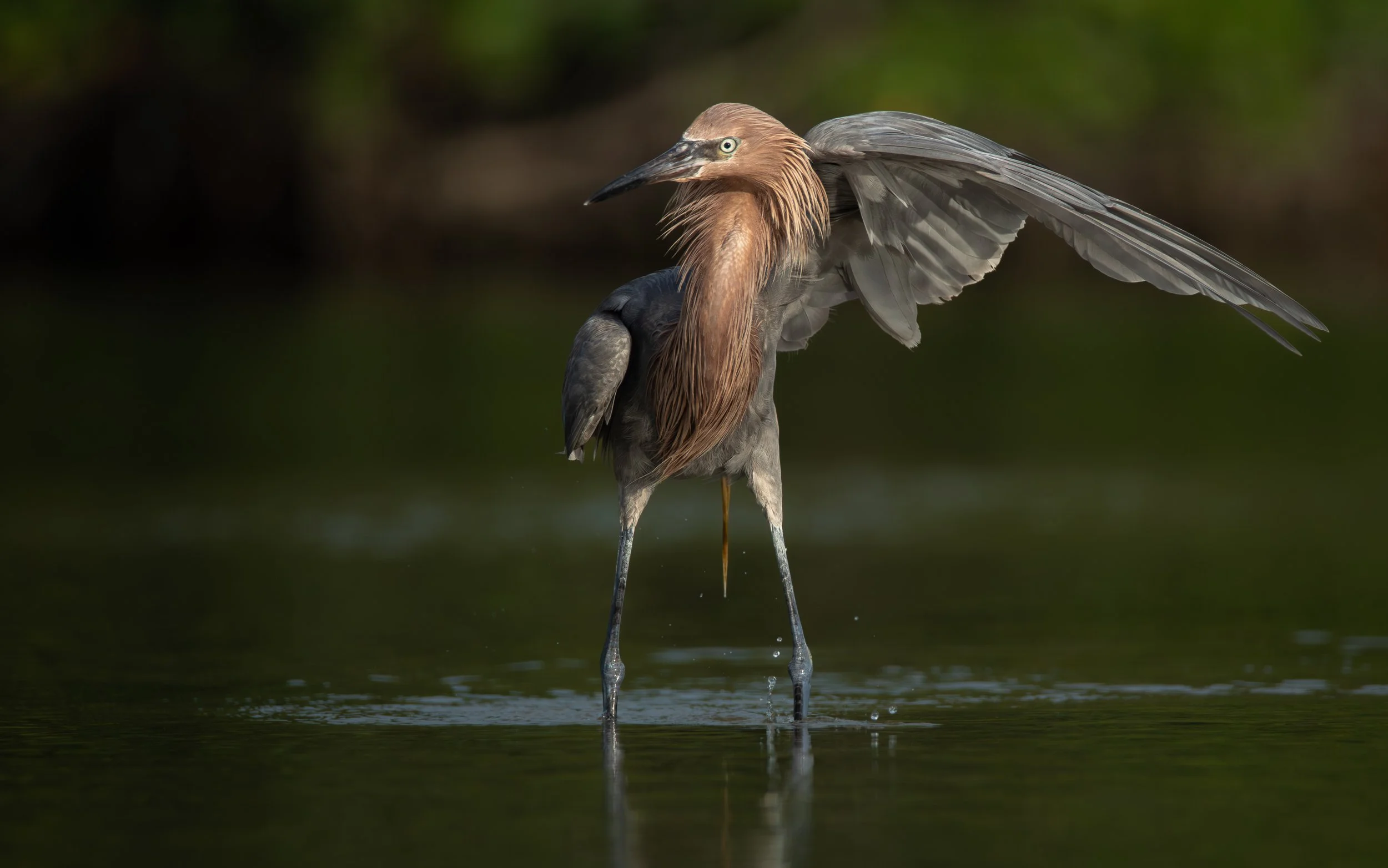
Image: With the flash of a wing, the reddish egret startles fish towards the shore.
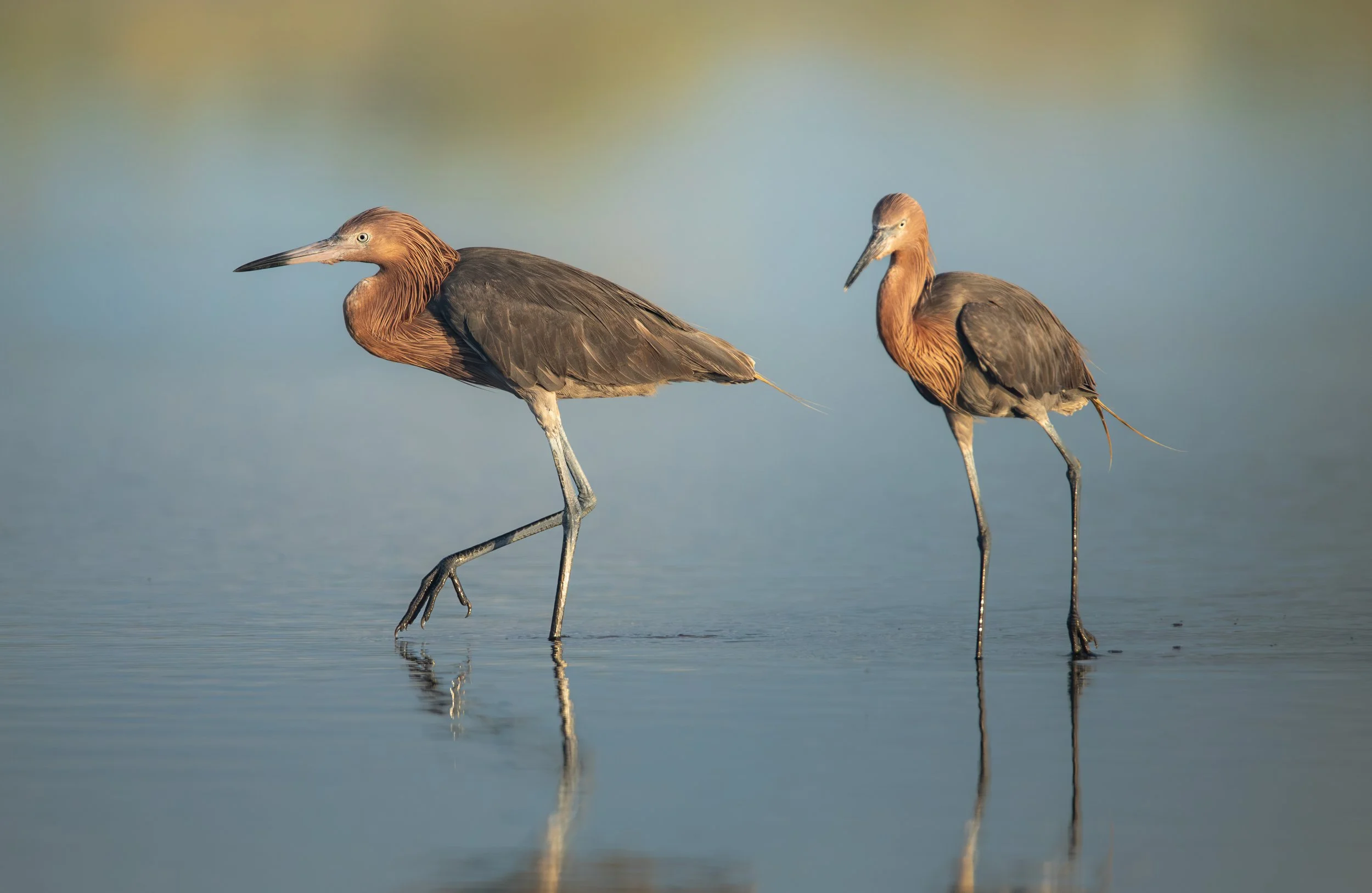
While families across the nation woke up to celebrate the 4th of July by grilling burgers and watching fireworks, I was already out on the white sand beaches of Fort De Soto Park in Florida. My goal wasn’t to snag the perfect sunbathing spot by the Gulf’s famously clear waters. I was there to find some of the wild locals. And to my amazement, only a few minutes into my search, I was greeted by two of the rarest herons in North America.
If chaos and elegance had a feathered child, it would be the reddish egret (Egretta rufescens). There is a status quo in the refined world of herons, and reddish egrets play the part of the rebellious younger cousin. They are a bold steely gray with a mane of fine cinnamon plumes, a two-toned pink and black beak, and blue legs. This, coupled with their spirited hunting strategy, makes them a beloved and unforgettable avian species. Finding one, however, is tricky.
Their lives are intertwined with salt water. They are most often associated with mud flats, though you may find them along shorelines and lagoons. With all of the coastal habitat in Florida, one would think they’d be a common sight. However, only an estimated 2,000 breeding pairs exist in the United States, and most of them nest in Texas. As with so many heron species, their numbers were decimated during the plume trade of the late 1800s. Though this species is now on the rebound, urbanization and climate change still pose significant threats to their rapidly disappearing habitat. But there are a few places where these birds thrive, and one of those happens to be the protected and highly diverse beaches of Fort De Soto Park, located only a few miles south of Clearwater.
Widely praised as one of Florida’s premiere wildlife viewing hotspots, Fort De Soto Park encompasses 1,136 acres across five islands where the Tampa Bay meets the Gulf of Mexico. Here, you can find mangrove forests, saltmarsh wetlands, palm hammocks, and, famously, pristine beaches. This mosaic of ecosystems makes it the perfect home for both marine and landbound wildlife, including over 320 bird species! And luckily for me, it is one of the most reliable places in the state to catch a glimpse of the reddish egret. Still, I could not have predicted the incredible day I would have with these magnificent and hyperactive birds!
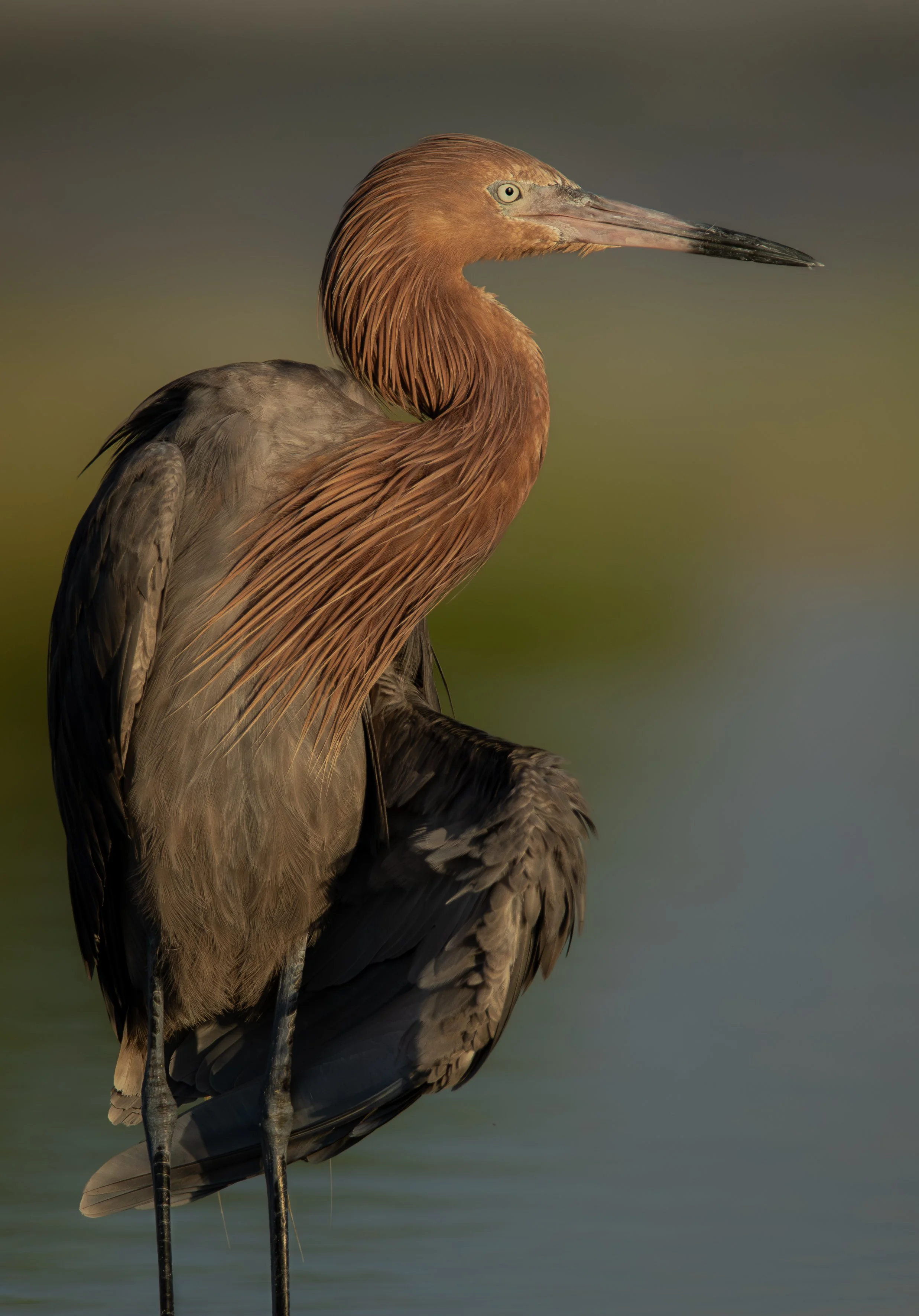
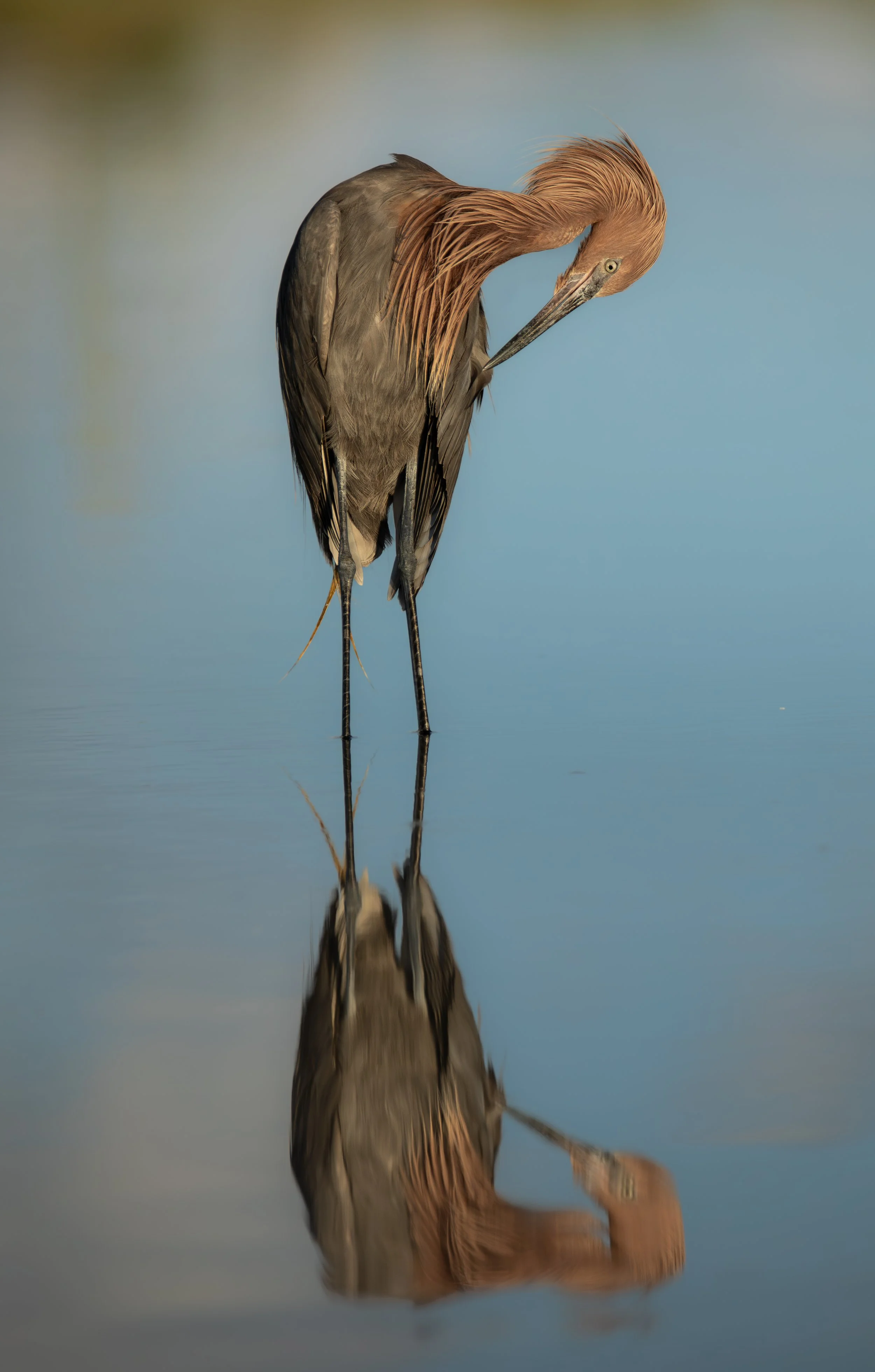
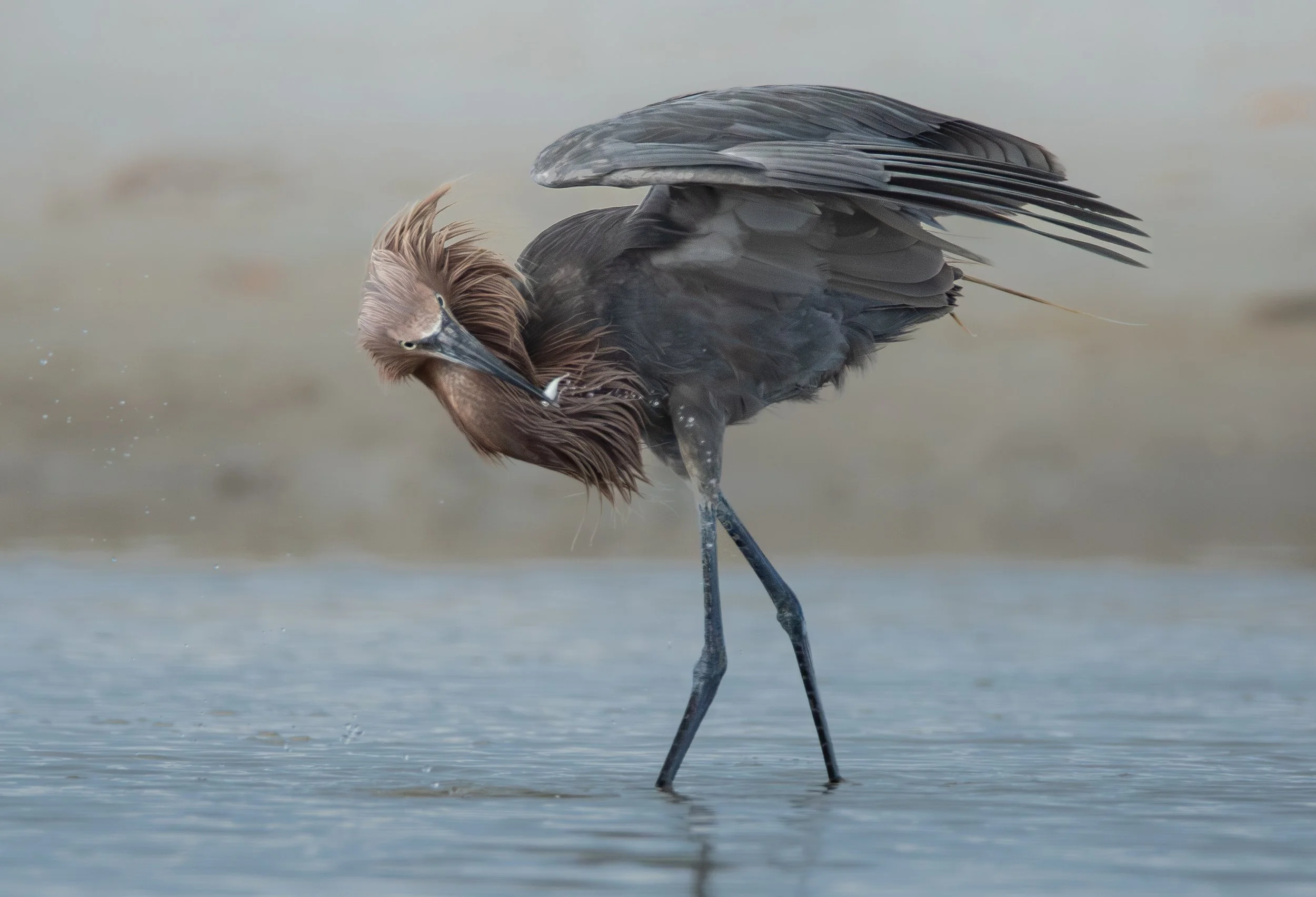
When I first spotted the adult pair, they were preparing for the day ahead with a preening session. Their beak interlocks separated feather barbules with precision for efficient flight. A specialized oil gland (known as the uropygial gland) secretes a hydrophobic sheen that prevents the egrets from getting bogged down in water. Preening is not just for vanity, it is crucial to their hunting success.
Once they were groomed into their Sunday best, it was time for breakfast. This area of Fort De Soto Park is right along the Gulf and dotted with a series of shallow lagoons and tidal flats, providing egrets and other shorebirds with a buffet of bait fish and crustaceans. It’s not uncommon to see herons waiting patiently along the water’s edge for prey to wander by. That’s not the approach of reddish egrets, however - in fact, their strategy is what sets them apart from every other heron species on the planet!
I took position in the shallow water as the pair took their places at opposite sides of the lagoon, and the stage was set. The dance was about to begin.
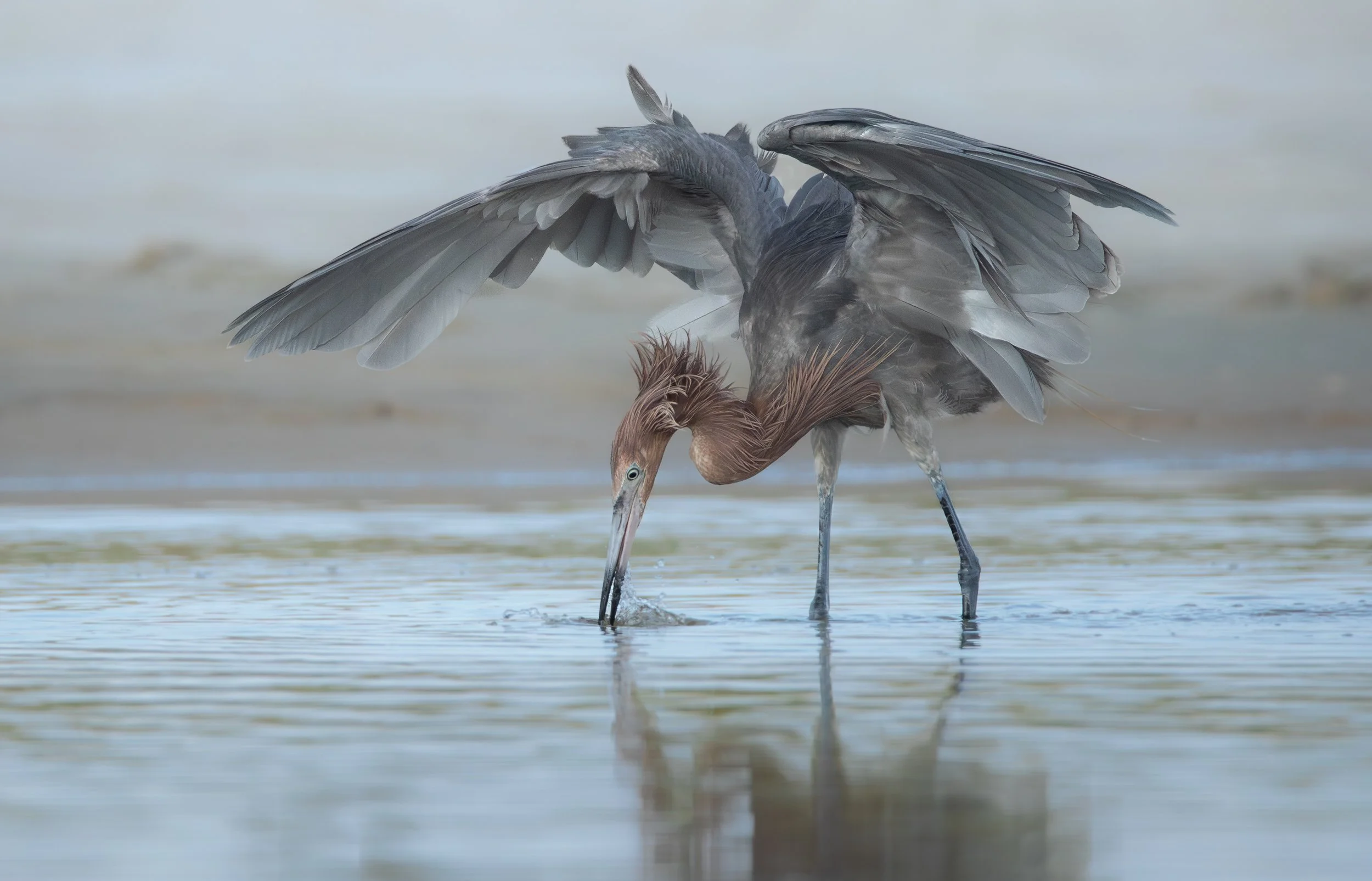
Golden eyes snap to each silver flash of fish scales darting through the water. They leap forward, wings flared. With extraordinary ease they sprint through the water, using their wings to steer the school towards the shore. It appears erratic at first glance, a flurry of long legs and feathers, but this choreography has been perfected over millennia.
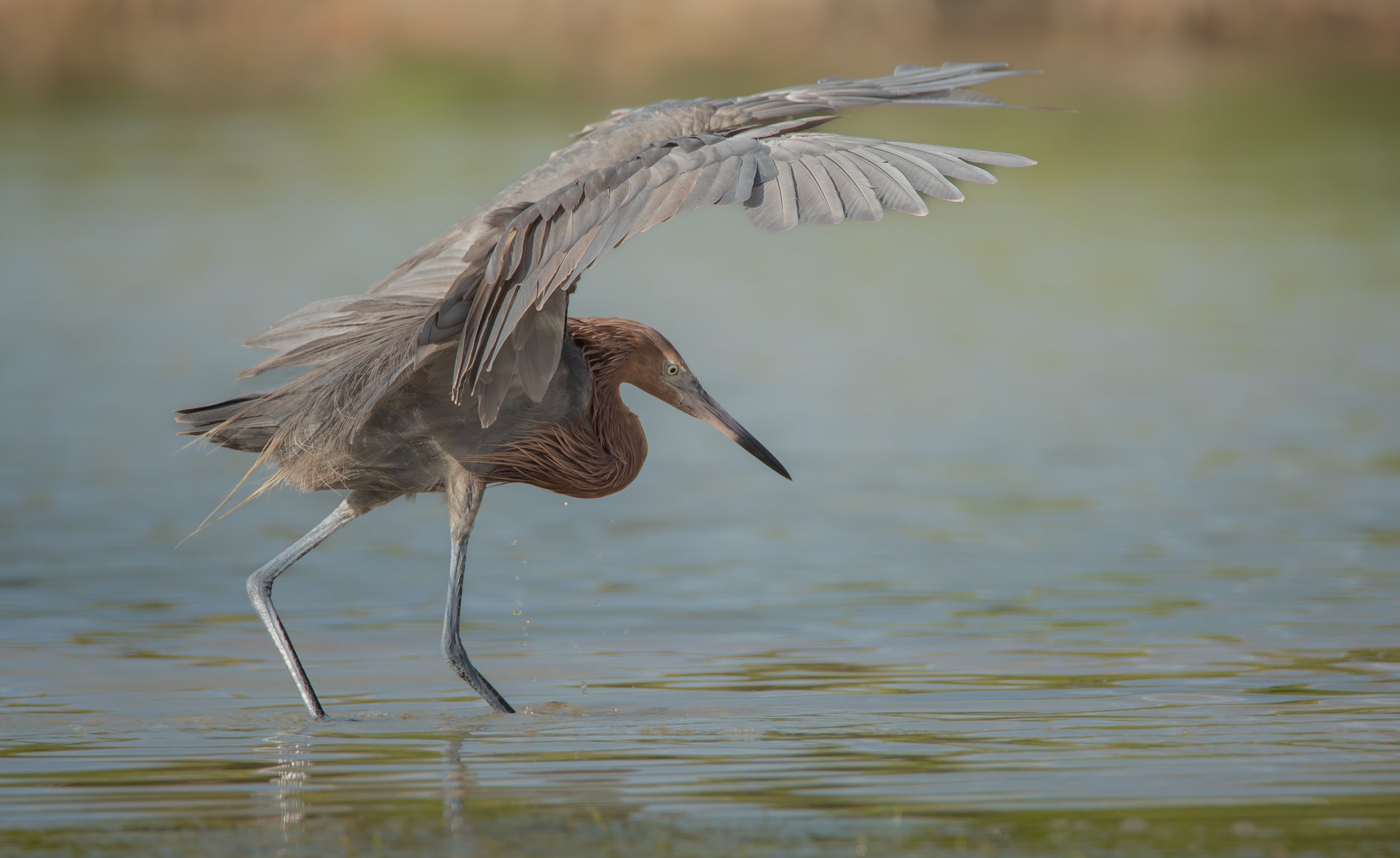
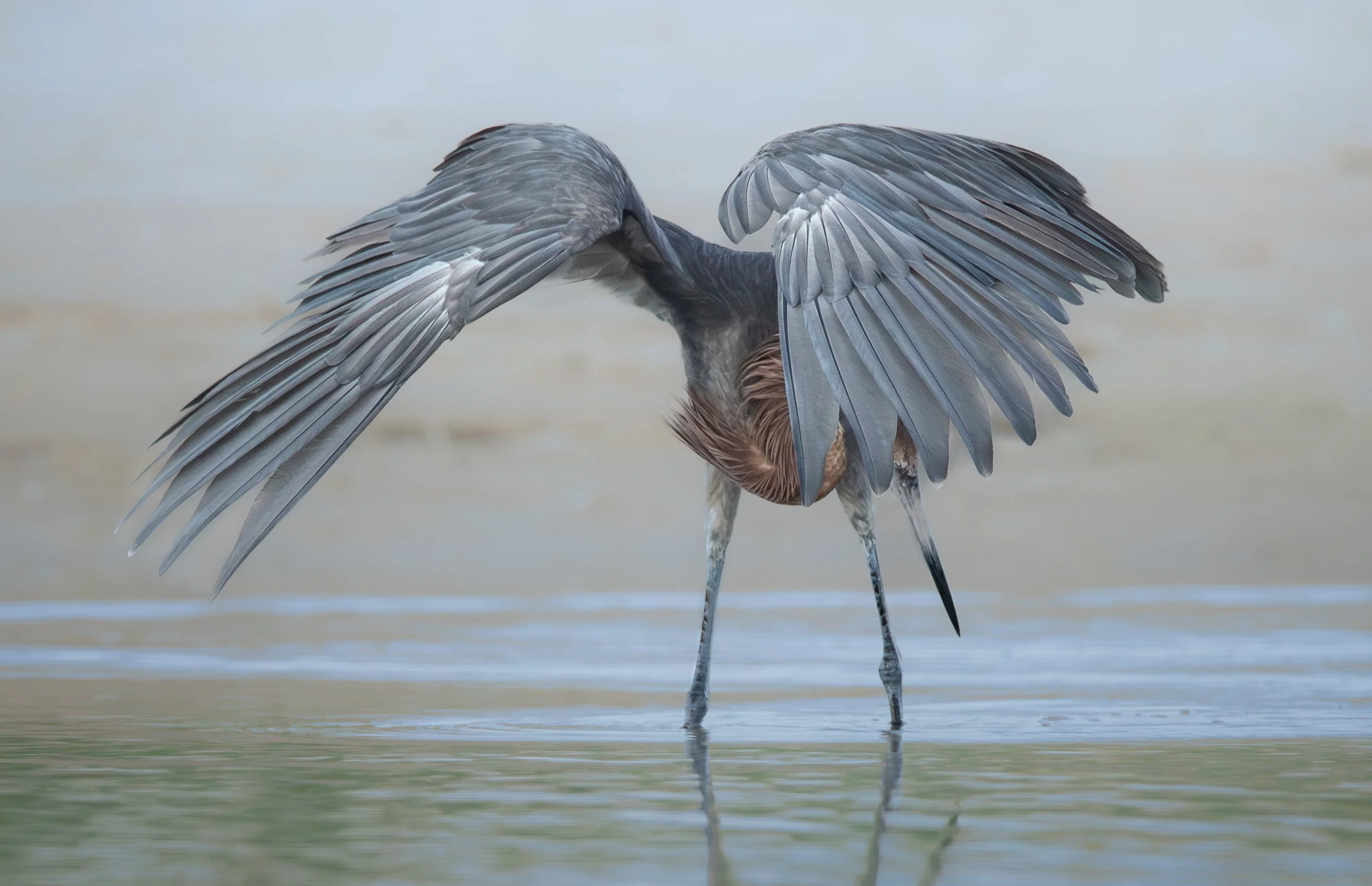
As the fish are herded into shallower waters, the egrets end their dance with a most impressive finale. They cup their wings over their head, a move that accomplishes two things at once; it blocks the sun’s glare and leverages the fishes’ natural instinct to retreat into the shadows. “Canopy feeding,” as it is often called, is their pièce de résistance. They strike at their prey quickly and gulp it down in a blink. But this is not the curtain call, because the dance begins once again until they have had their fill.
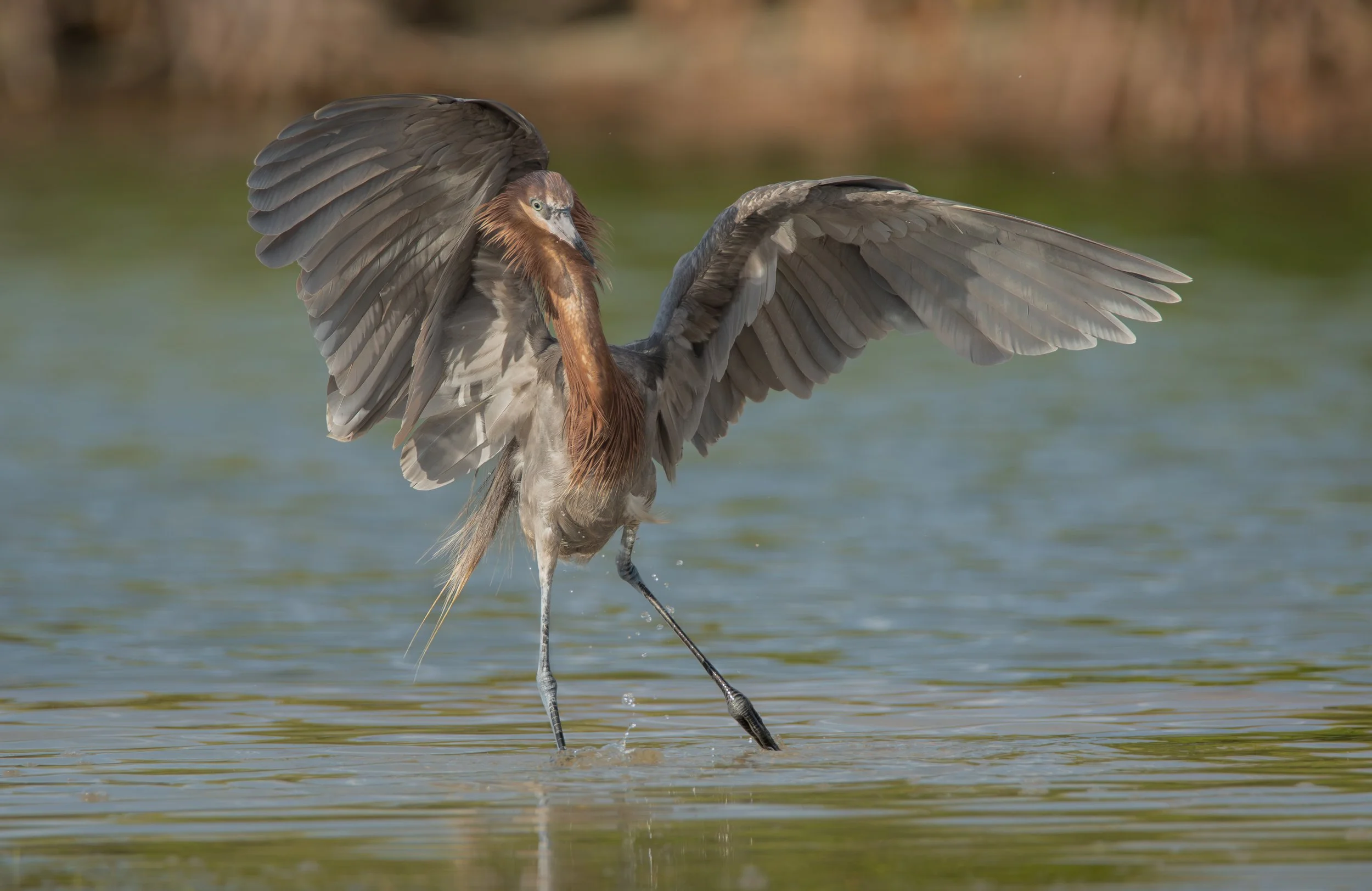
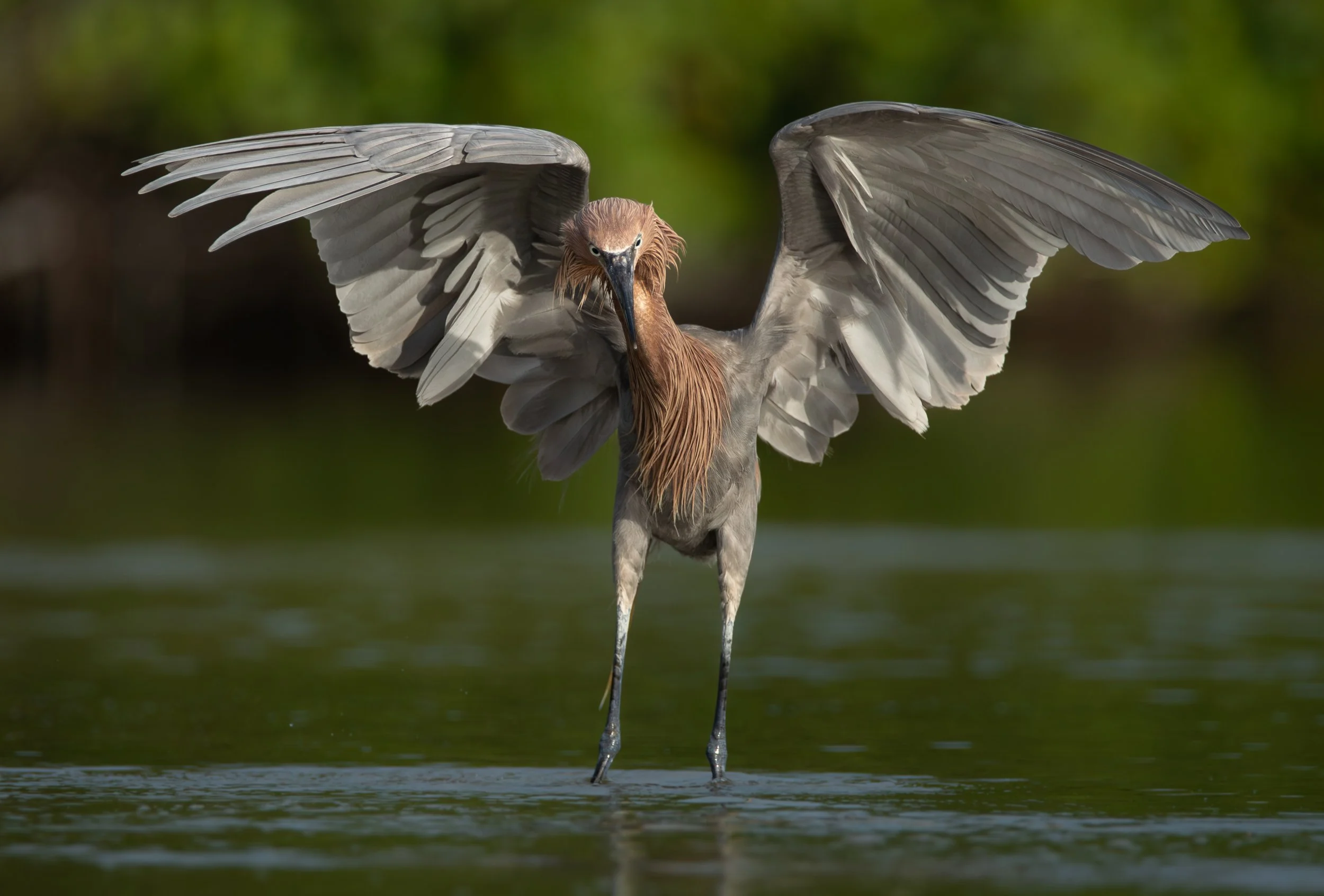
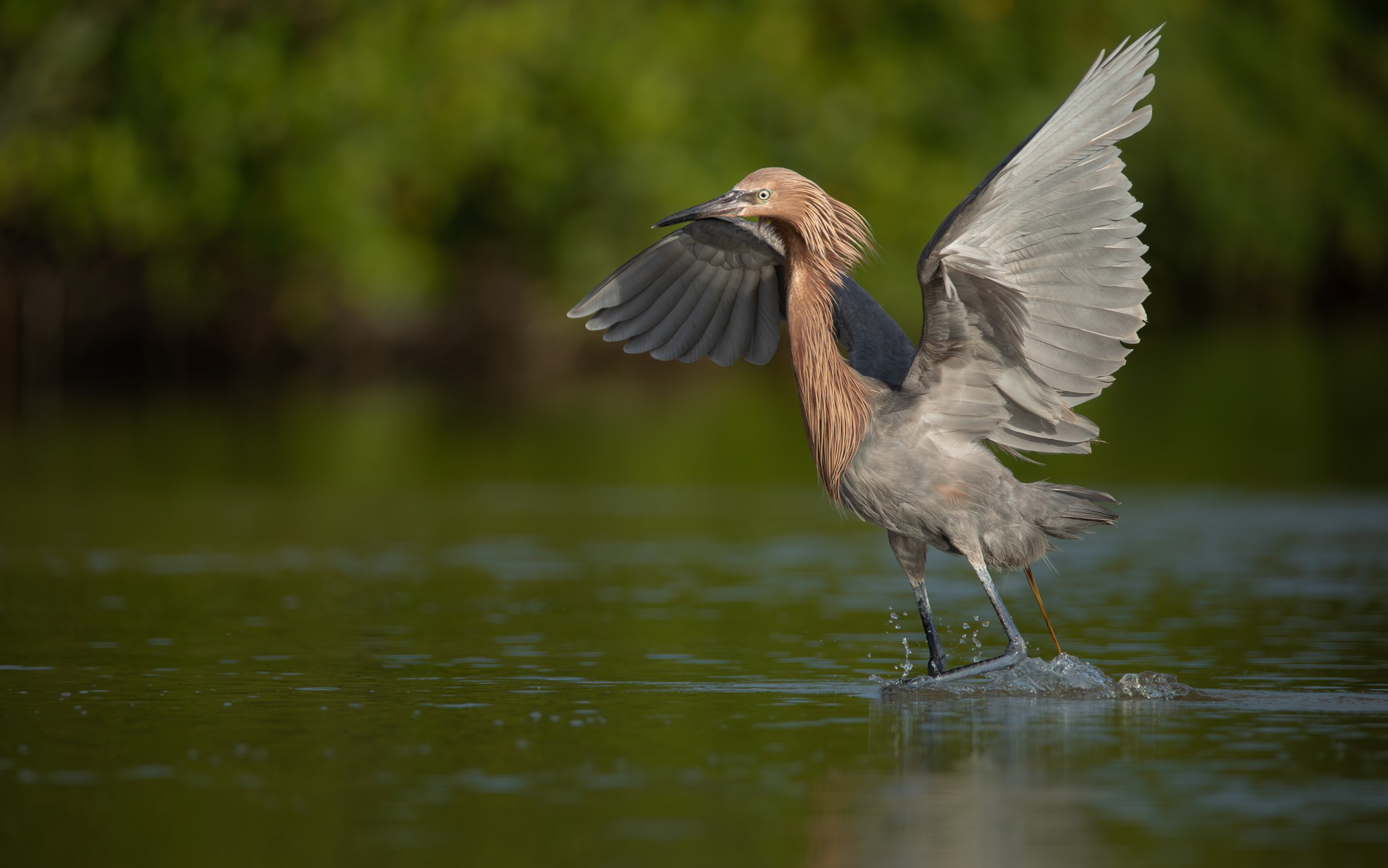
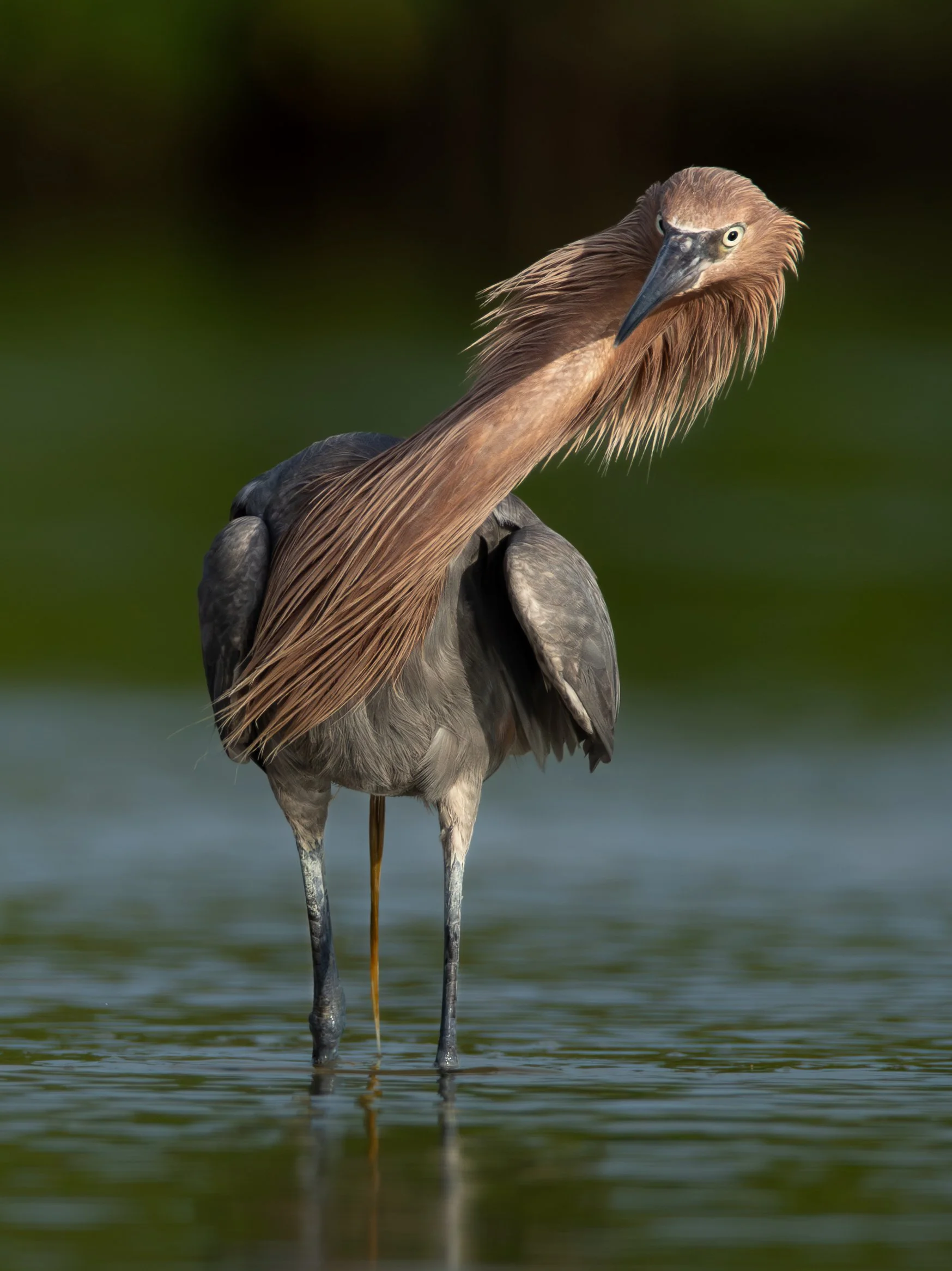
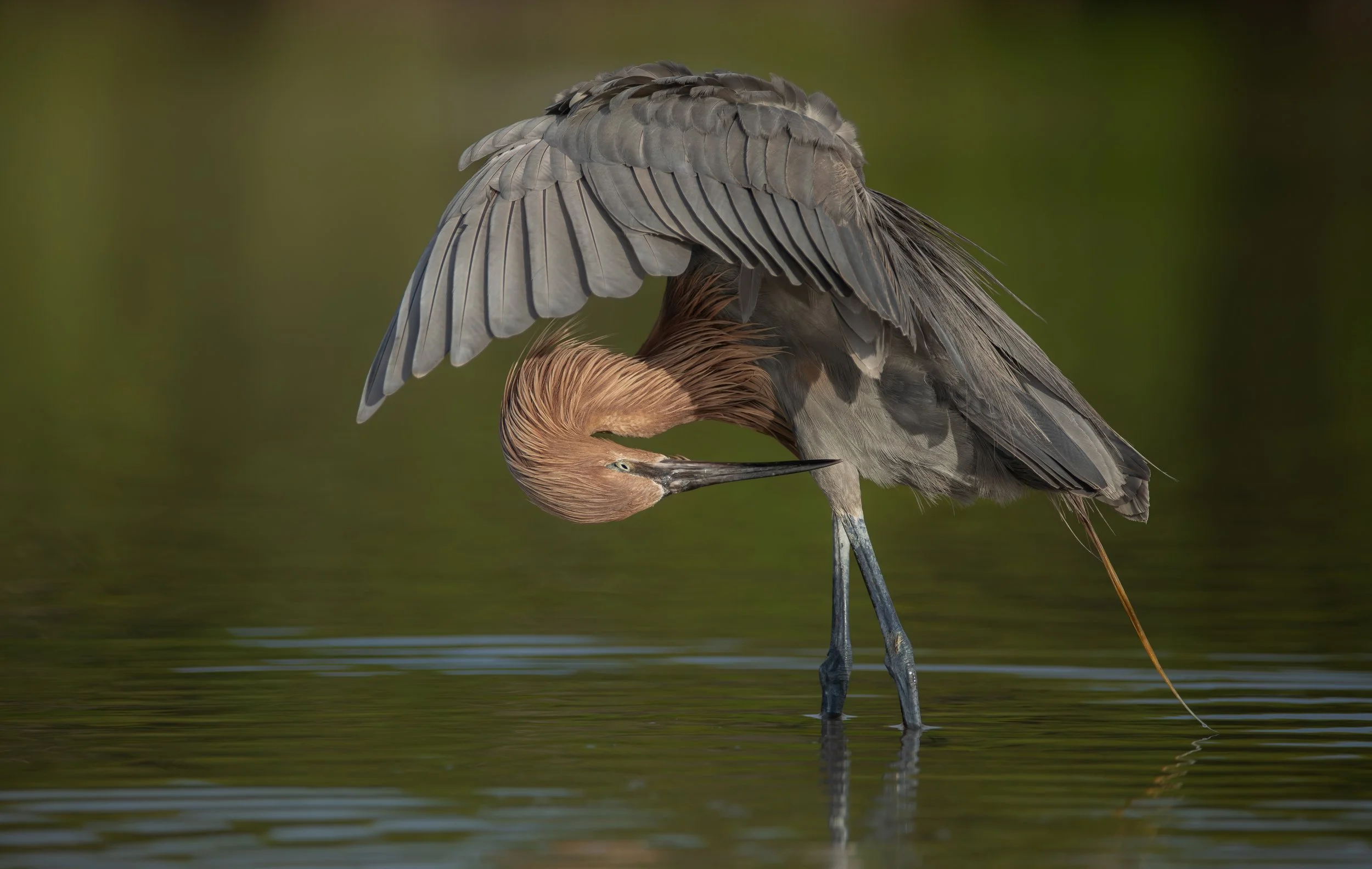
Watching this incredible display, it’s no wonder why natural history author Pete Dunne cheekily dubbed them “the Tyrannosaurus rex of the Flats.” You almost never find them stationary, and even in those fleeting moments of rest, one cannot help but feel like they are a loose cannon waiting to ignite. It is this eccentricity that draws bird enthusiasts to the pristine shores of Fort De Soto Park from far and wide for the chance to watch the egret’s dance in person.
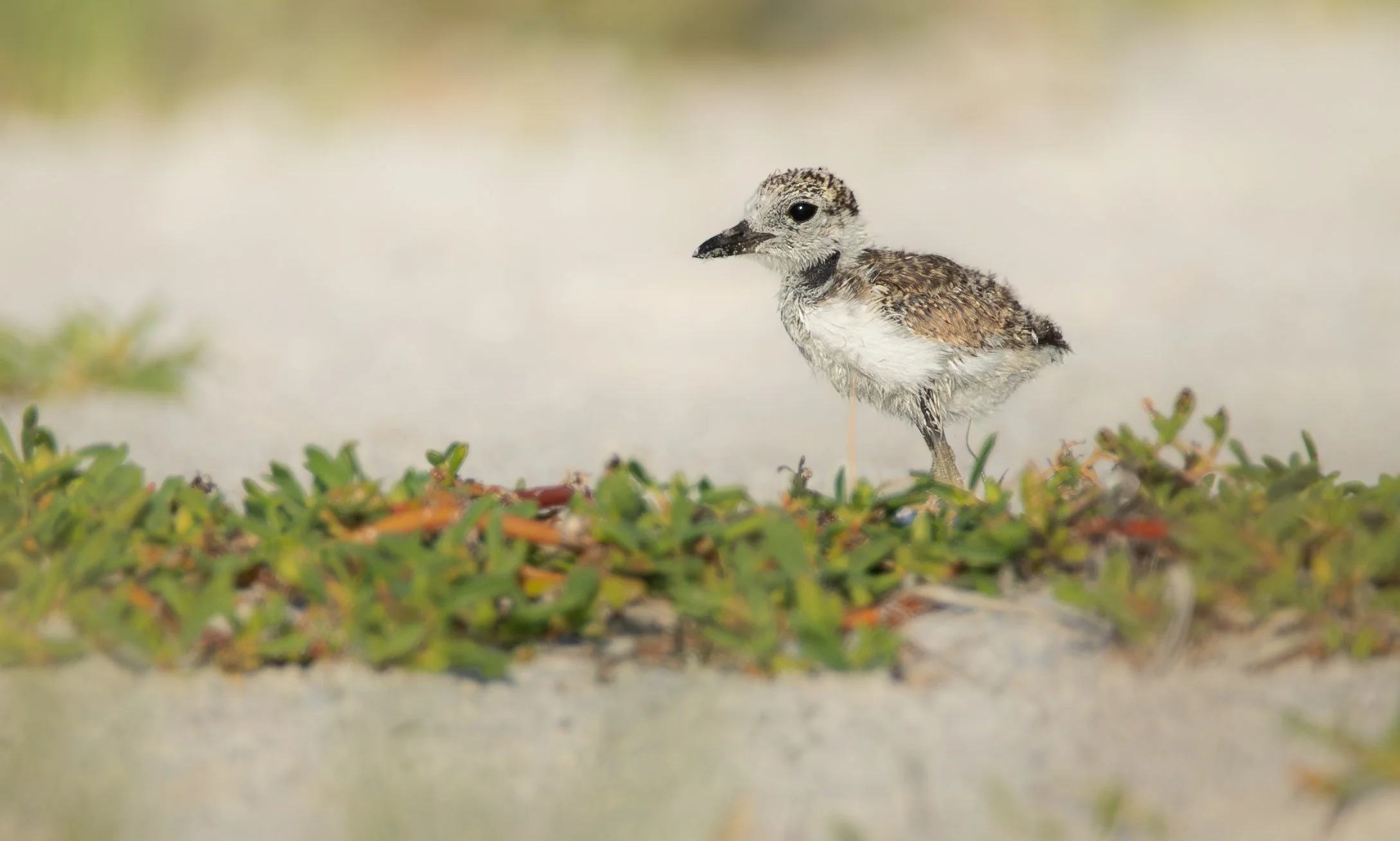
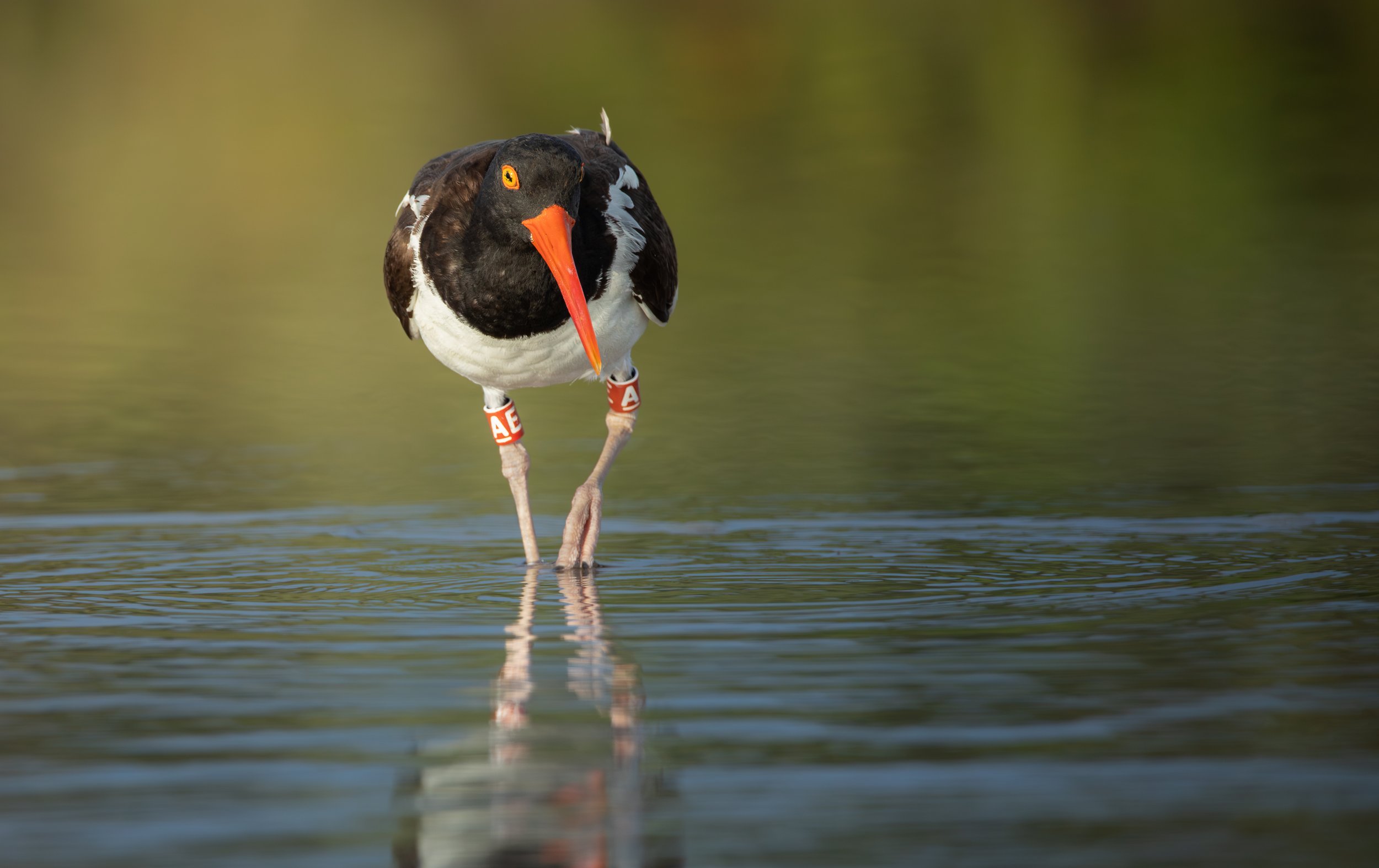
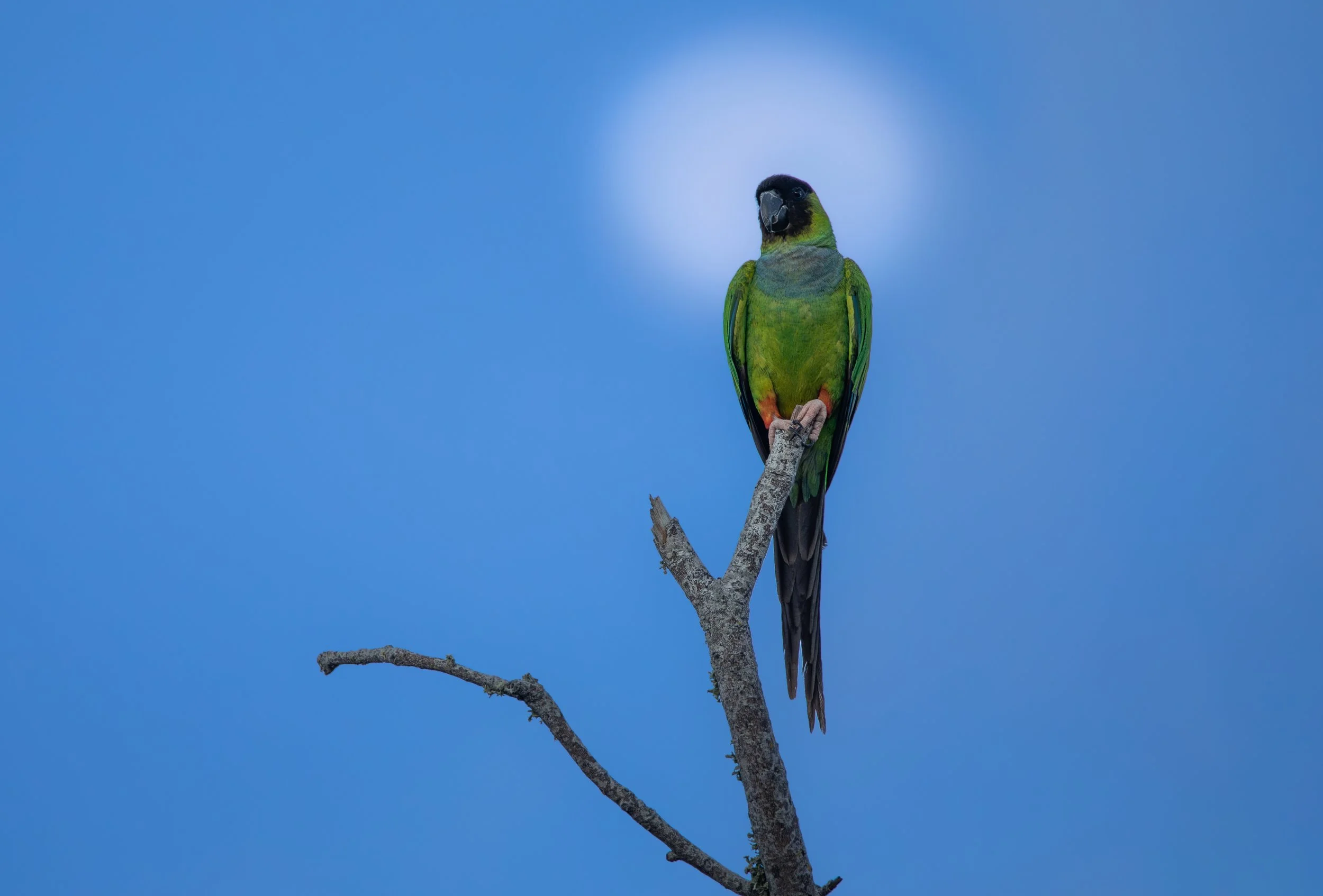
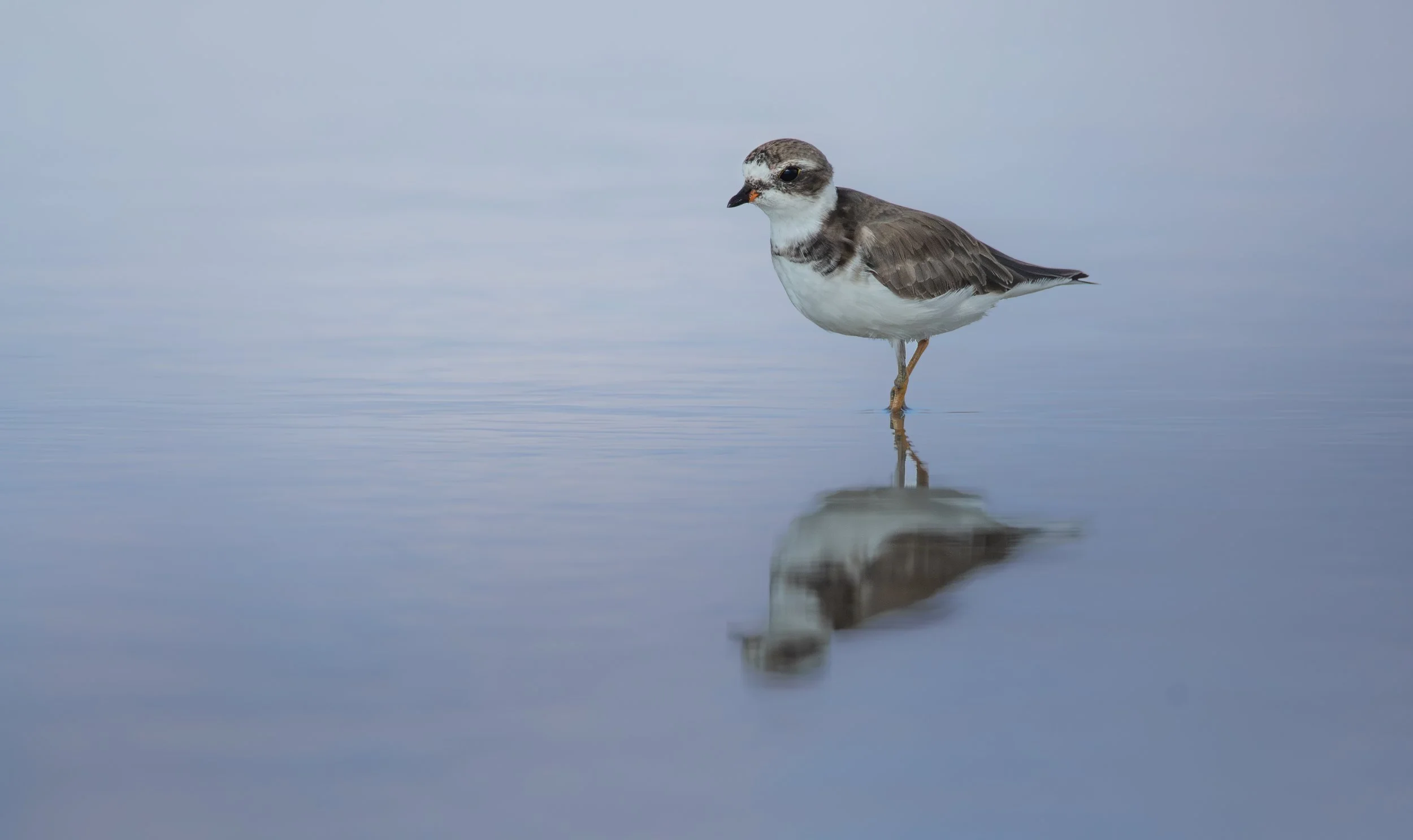
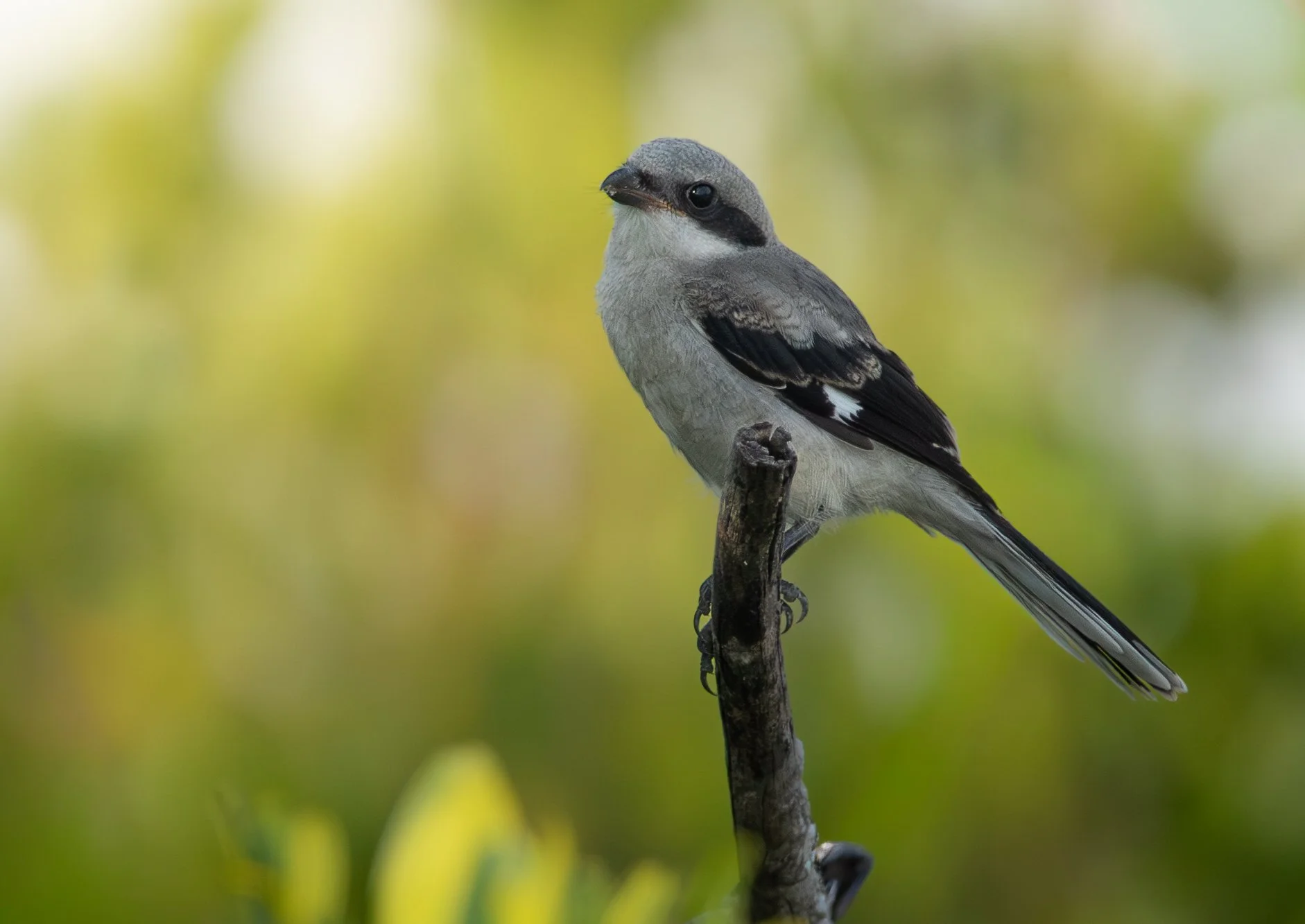
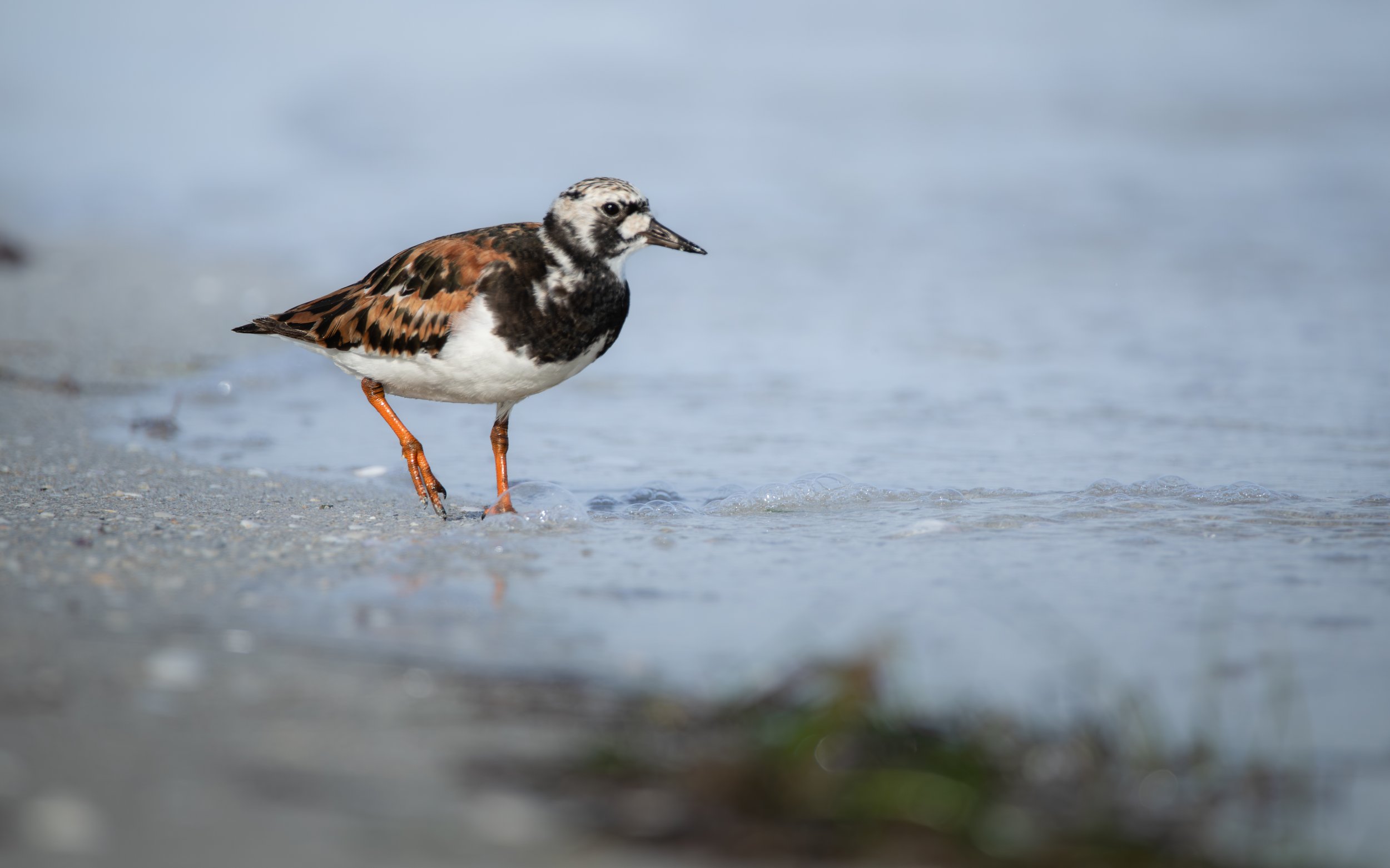
Reddish egrets may be the stars of the show, but they are not the only critters you may see. Various species of shorebirds nest here, including American oystercatchers (Haematopus palliatus), Wilson’s plovers (Charadrius wilsonia), least terns (Sternula antillarum), and royal terns (Thalasseus maximus), to name a few. Ruddy turnstones (Arenaria interpres) scurry near the waves while loggerhead shrikes (Lanius ludovicianus) prowl the dunes. You may even spot a noisy flock of non-native nanday parakeets (Aratinga nenday). To top it off, these islands are crucial pitstops for dozens of migratory species in winter and spring. If you ever find yourself along the Gulf Coast, you should put this place on your itinerary!